Without a doubt, one of Belgium's greatest attractions is its brewing industry, which has captivated the palates of locals and visitors alike for centuries, making Belgian beer a renowned and beloved product worldwide. In fact, it can be said that Belgium is not only a beer-producing country, but also the epicenter of a culture and historical tradition that UNESCO recognized as Intangible Cultural Heritage of Humanity in 2016. Today, Belgium boasts over 400 active breweries of varying sizes, producing more than 1,500 different beers, quite remarkable figures considering it is a country with just 12 million inhabitants.
The Belgian beer ecosystem is home to all kinds of beers, from ancient recipes with centuries of history behind them to modern creations that seek to extract the maximum potential from malt and hops. However, within this vast and varied universe, there is a select group of beers considered by experts to be the elite. These are high-quality beers, maintained and refined over centuries, and which for many possess an almost mystical quality. These are Trappist beers, an exclusive club comprised of only a small number of breweries linked to monasteries of this religious order.
In this select group, Trappistes Rochefort holds a place of honor for its dark, complex beers, distinguishing itself as one of the finest breweries produced in Wallonia. Trappist breweries are not known for embracing innovation or engaging directly with their customers, which is why it was a true honor to attend Rochefort's presentation in Madrid to unveil an exclusive new product. This event, organized in conjunction with the Belgian Embassy in Spain, the Spanish branch of AWEX, and the beer distributor Fine Beers, featured the brand's director and the brewmaster, who explained in detail the unique characteristics of this historic brewery.
What distinguishes a Trappist beer?
Although it may seem like a homogeneous and closed group, it is important to clarify that Trappist beer is not a beer style in itself. In the collective imagination, any beer with a picture of a monk or the name of a saint on the label is associated with monastic tradition. However, in the professional brewing world, there is a very clear distinction: it is either Trappist or "abbey" beer.
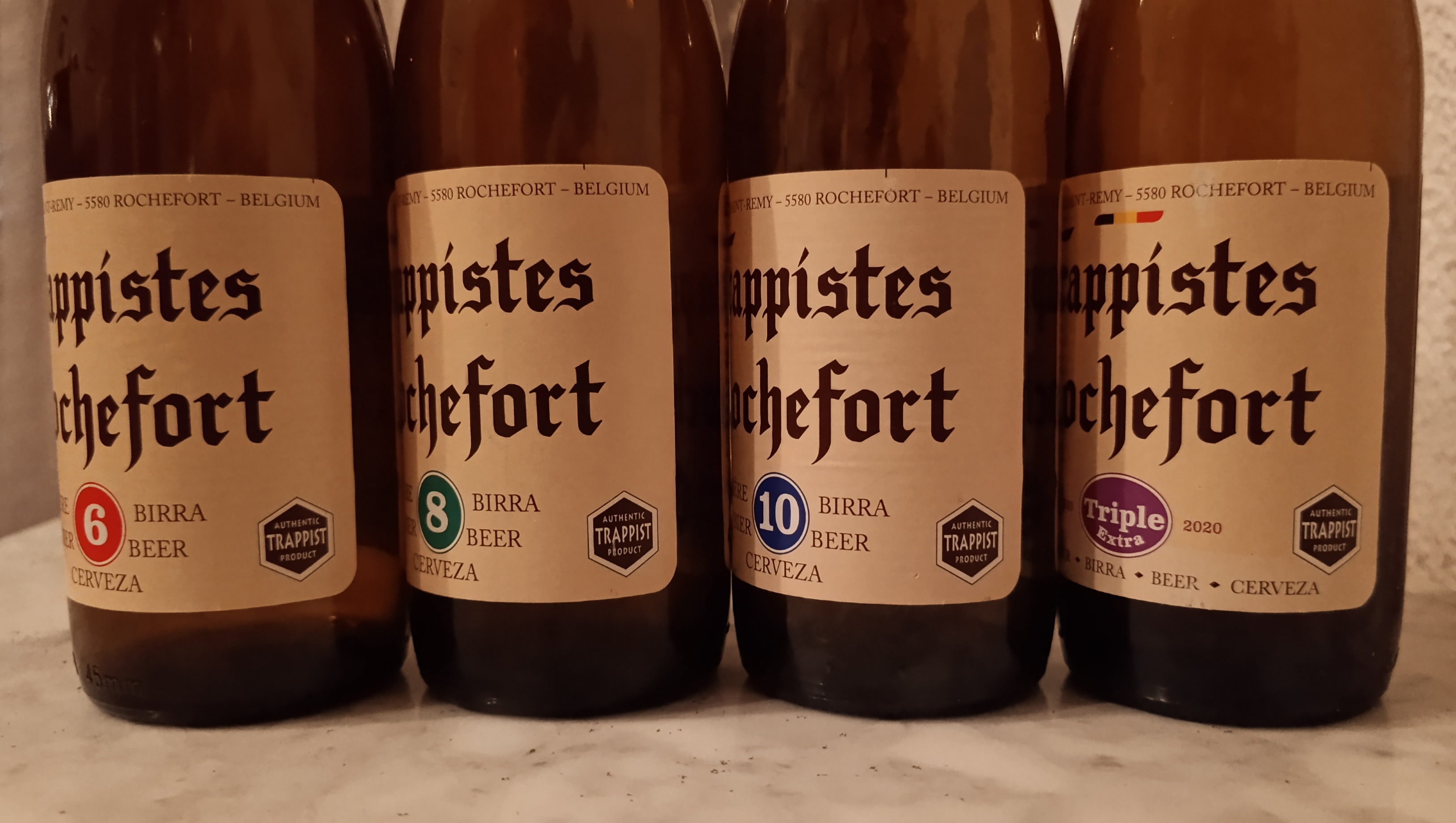
While abbey beers are commercial products made by industrial breweries under license, Trappist beer is a protected designation of origin granted by the International Trappist Association (AIT). For a bottle to bear the exclusive hexagonal "Authentic Trappist Product" seal awarded by the AIT, it must meet three immutable golden rules:
- Within the abbey: The beer must be brewed within the grounds or in the immediate vicinity of a Trappist monastery.
- Under the habit: Production must be carried out or supervised by the monks of the Cistercian Order of the Strict Observance, more commonly known as Trappist monks, who are directly involved in the brewing and quality control of the beer.
- Non-profit: The profits from the sale of the beer are not intended to enrich a company, but are used to support the monastic community and maintain the abbey, with the surplus dedicated to social works and charitable projects.
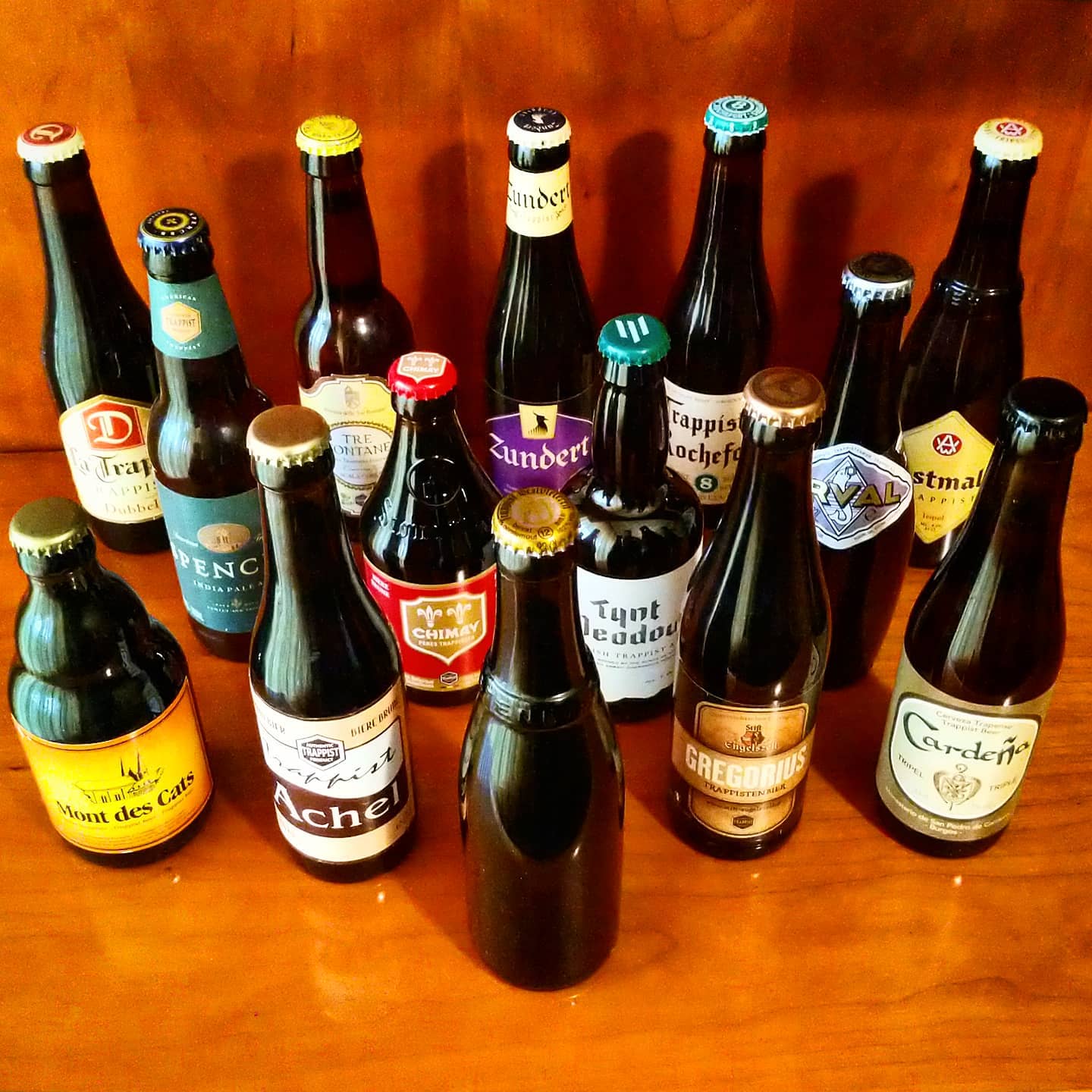
Today, only ten Trappist abbeys have the right to use this seal on their beers. All of them are in Europe (although there was also one in the United States, which recently ceased brewing), half are linked to monasteries in Belgium, and three are located in the Walloon region of the country. The catalogs of these breweries include a few beers of classic monastic styles such as dubbel, tripel and quadrupel, although in principle nothing limits the creativity of their brewmasters. What they all have in common is the philosophy of "ora et labora" (pray and work), that is followed by the monks who brew them, and who turn them into beers produced without haste and without purely commercial objectives, as a complement to their religious life but with a high quality maintained over time, produced in small batches that increase their exclusivity.
A journey to the origin of Rochefort: The Abbey of Saint-Rémy
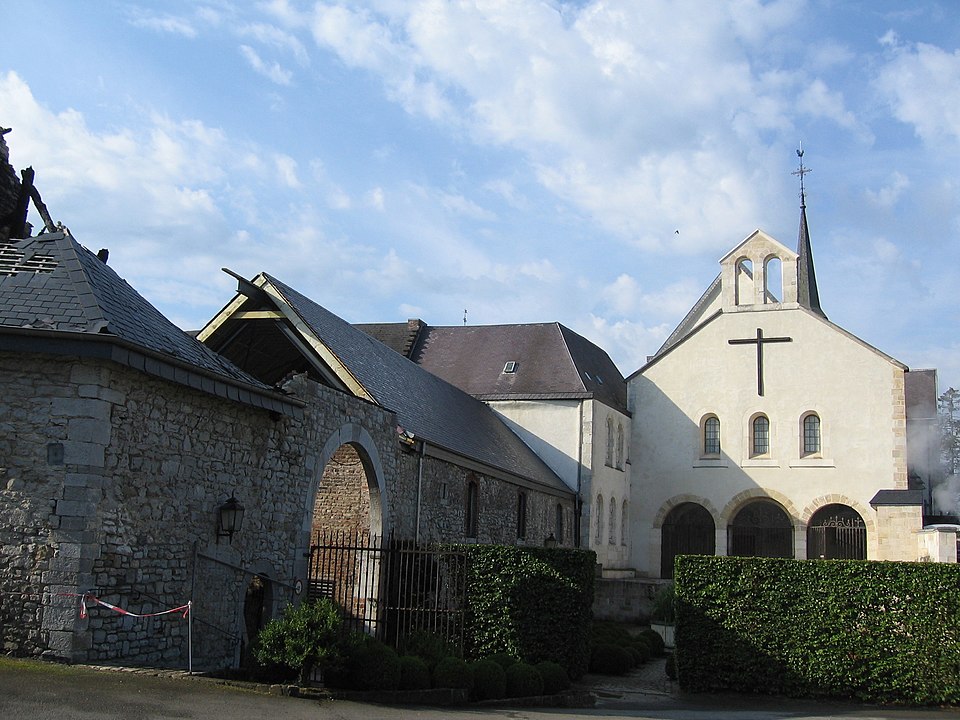
Along with the equally renowned Orval and Chimay, Brasserie de Rochefort completes the Trappist brewing triangle of Wallonia, and its history is measured not in years, but in centuries. It is based at the Abbey of Notre-Dame de Saint-Rémy, founded in 1230 near the town of Rochefort, located in the Walloon province of Namur, in the heart of the historic Ardennes region. But the path of this nearly 800-year-old Trappist monastery has been anything but easy. For centuries, the abbey has been a direct witness to some of the most turbulent chapters in European history. The monastery was repeatedly sacked and devastated by wars and religious conflicts during the 16th century, but its monks overcame adversity, and in 1595 they opened their first brewery.
However, the hardest blow to the abbey came with the French Revolution, which led to the confiscation of its lands and the dissolution of the community in 1805. Its buildings were destroyed and converted into a farm. It wasn't until 1887 that the Trappist monks returned to Saint-Rémy, restoring monastic life and its brewing tradition thanks to the help of the monks of Achel, another brewing abbey in the area. With their collaboration, they were able to establish a new brewery, resuming their own beer production in 1952.
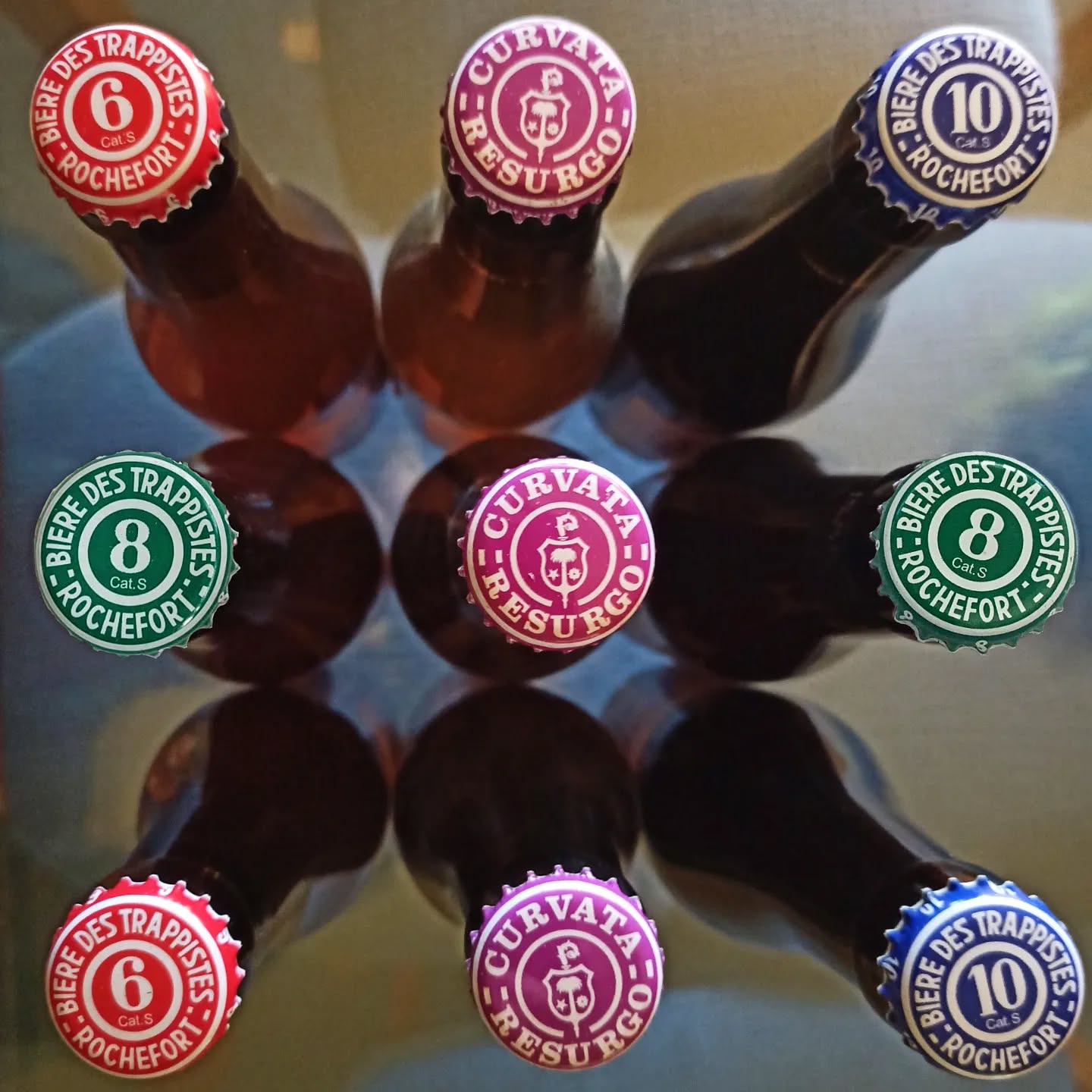
But a new catastrophe loomed over the monastery, in a story worthy of legend. In 2010, a great fire destroyed part of the abbey's buildings, damaging its ancient wooden structures. Miraculously, the monks escaped unharmed, and the brewing area remained intact, allowing production to continue and the "heart" of Rochefort to keep beating. The abbey's motto, which can be seen on the bottle caps of some of its beers, exemplifies its ability to overcome all adversity. "Curvata resurgo", translated from Latin as "I fall, I rise", perfectly reflects the resilience of the Saint-Rémy monastic community, their refusal to surrender to misfortune.
Today, the abbey remains a strictly cloistered place. Unlike other Trappist breweries that allow visits to their museums or adjoining cafes, Saint-Rémy remains closed to the public, protecting the aura of mystery and spirituality that permeates its bottles. But although beer enthusiasts cannot access the premises, the beer does leave. Initially, the monks brewed this beverage solely for the abbey's own consumption, as its high nutritional content helped them endure periods of religious fasting and reinforced their austere vegetarian diet. Obviously, those beers were not as strong as today's varieties; they were recipes with a mere 0.8% alcohol, in the style of enkel-patersbier. Furthermore, exceptionally, during World War II, the abbey produced a 5% beer that was used to feed the wounded and sick sheltered in the region. But there is something that has not changed for decades, and that is that beer production is the main source of income for this monastic community.
Currently, they produce around 56,000 hectoliters per year, utilizing approximately two-thirds of their factory's capacity to ensure the highest quality product. A few years ago, they used beautiful copper kettles for mashing and boiling, but today they prepare about six 15,000-liter batches per week in modern stainless-steel tanks. Their production for export is distributed as equitably as possible among their customers at a very reasonable price, without resorting to the aggressive marketing strategies common in the industry.
The secret is in the water (and the yeast)
If there is one thing that defines the character of Rochefort, it is the exceptionally high quality of the ingredients used in its recipes. Two elements are responsible for the sensory profile that any professional taster could recognize in a blind taste test: water and yeast. All Rochefort beer is brewed with water from a natural spring located within the abbey grounds, known as the Tridaine spring. It is pure, untreated water that imparts a unique minerality. And it is so vital to the quality of the product that, for years, the abbey has fought legally against nearby mining projects to protect the purity of its aquifer.
If water is the body of beer, yeast is its soul, the true agent responsible for transforming the sweet grain wort into a unique beverage. Rochefort uses its own exclusive yeast strain, cultivated and jealously guarded for decades. It is said that the current strain has its roots in the 1950s, perfected with the help of the nearby Chimay Abbey (with whom they maintain a healthy relationship of friendly competition and collaboration). The yeast is responsible for the esters, aromas reminiscent of figs, raisins, dates, and spices. This proprietary strain withstands the high alcohol content of the brewery's beers and continues to evolve in the bottle through refermentation, allowing a Rochefort to age for years, gaining complexity over time.
The remaining ingredients in their recipes are Pilsner and Munich malts, along with some special malts to add color and complexity, hops of the Hallertäu and Goldings varieties, as well as white and brown sugar to carbonate and enrich its body.
As for its staff, the Saint-Rémy community is quite small, currently numbering around 15 monks. Of these, only 6 are directly involved in beer production, relying on external lay workers to assist with logistics, administration and maintenance. The monks do regularly participate in the Friday tastings, when they check that the beers produced during the week meet the brand's strict quality standards.
Rochefort's "Royal Range"
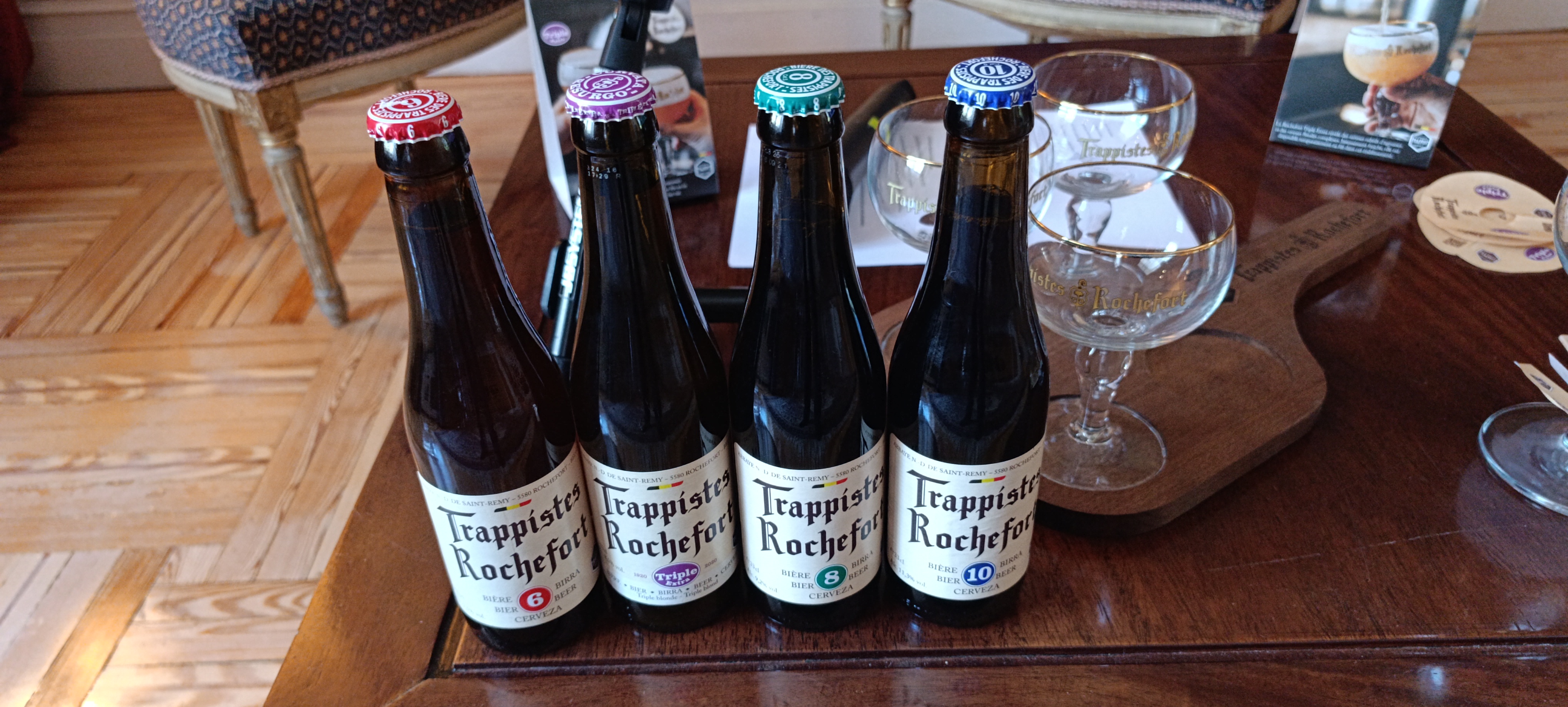
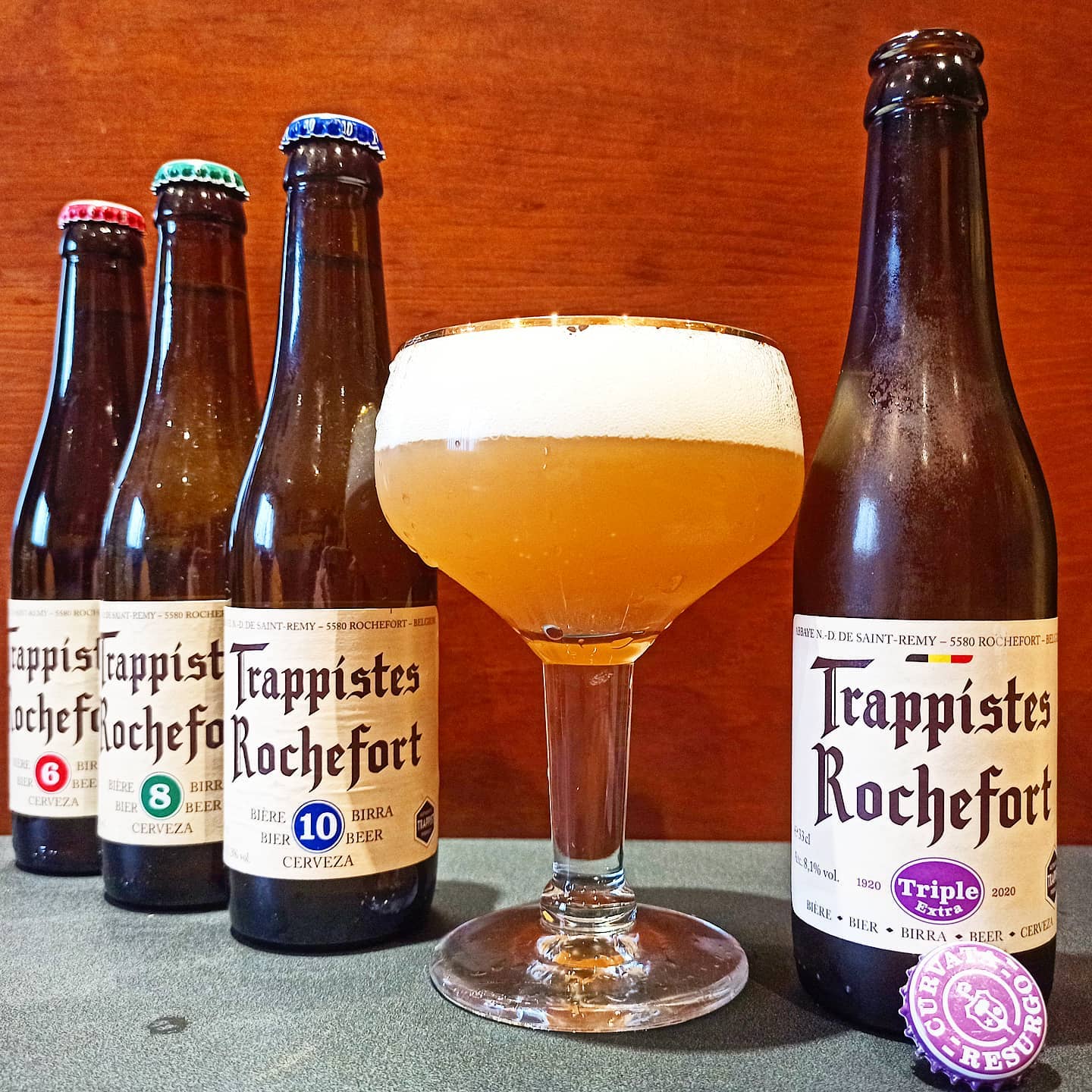
Brasserie de Rochefort's beer family is small, but solid and highly regarded. Their beers are not recognized by brand names, but rather by their colored caps and numbers, which act as a scale of intensity and complexity. These numbers do not refer to the alcohol percentage, but to the old Baumé degrees, a scale that measured the density of the wort before fermentation and was also used by tax officials to calculate the taxes levied on each beer. Their current catalog includes the following beers:
- Rochefort 6 (red cap). It is the oldest and least produced, representing barely 10% of the total volume. Until 1958, this dubbel was the only one of their beers that was bottled. It has 7.5% alcohol, a dark amber color, is malty and slightly bitter, and presents notes of toast and nuts, with a subtle touch of tea and herbs.
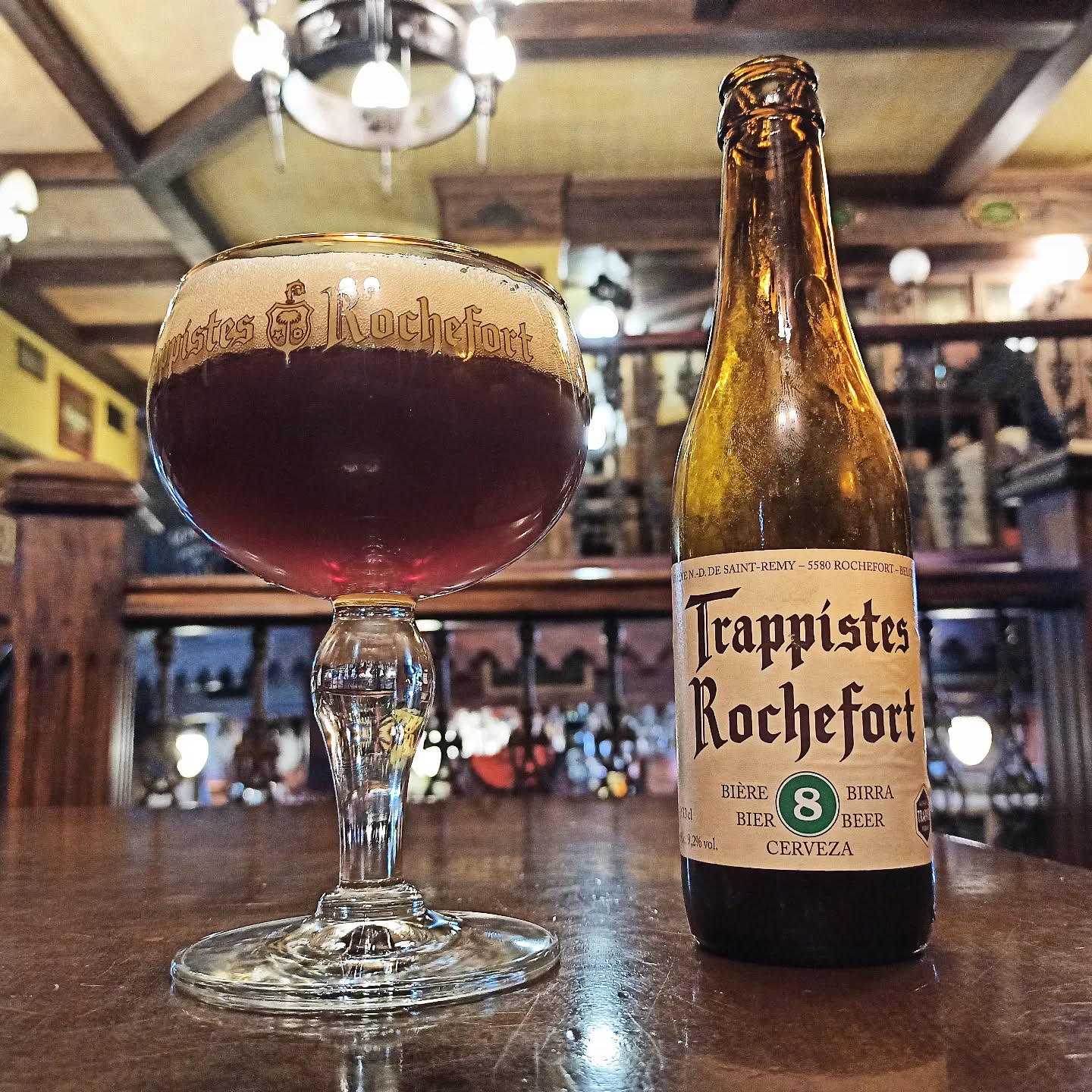
- Rochefort 8 (green cap). It was created in 1955 to celebrate the New Year, but it was so successful that it became a permanent fixture, and has been the most produced variety ever since. It is a Belgian strong dark ale with 9.2% ABV, a deep brown color, with hints of figs and dates, and a slightly drier and spicier finish than its siblings.
- Rochefort 10 (blue cap). It is the jewel in the crown, one of the best beers in the world according to numerous rankings. With its impressive 11.3% ABV, it is an almost liqueur-like quadrupel, with notes of dark chocolate, smoke, prunes, nuts, molasses and a warm finish, where the candi sugar enhances its alcohol and body.
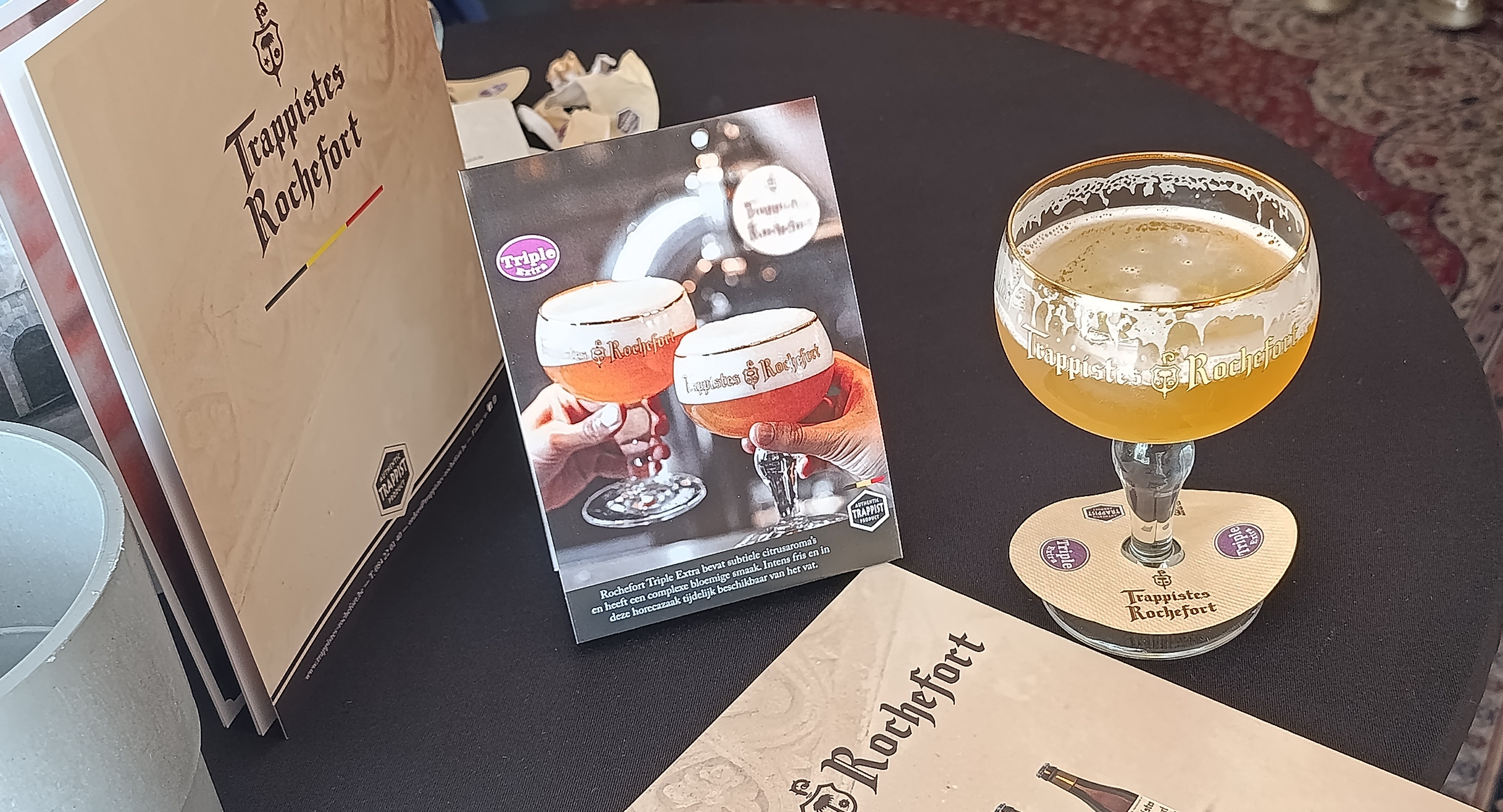
- Rochefort Triple Extra (purple cap). Introduced in 2020, it is the first blonde ale the abbey has released in 68 years. With 8.1% alcohol, it pays homage to a century-old recipe dating back to 1920. It features prominent citrus notes, the earthiness of wheat, and the freshness of hops, while maintaining its distinctive silky character.
Despite their apparent strength, the four beers brewed by Rochefort share a common trait: their excellent balance, resulting in complex yet neither excessive nor overwhelming beers. The brand's first major recognition came in 1910, when its recipes won awards at a brewing competition in Brussels. Given its prestige, in 1997 Rochefort was one of the founding members of the AIT (International Trappist Association), becoming the oldest active brewery in the Association.
Rochefort's presentation in Madrid
Due to its unique characteristics, Trappistes Rochefort rarely participates in events or promotional activities, as these are not necessary for marketing its beers. Unlike other industrial brands, Rochefort does not seek endless growth, but rather to maintain quality and the monastic lifestyle, producing just enough beer to meet demand.
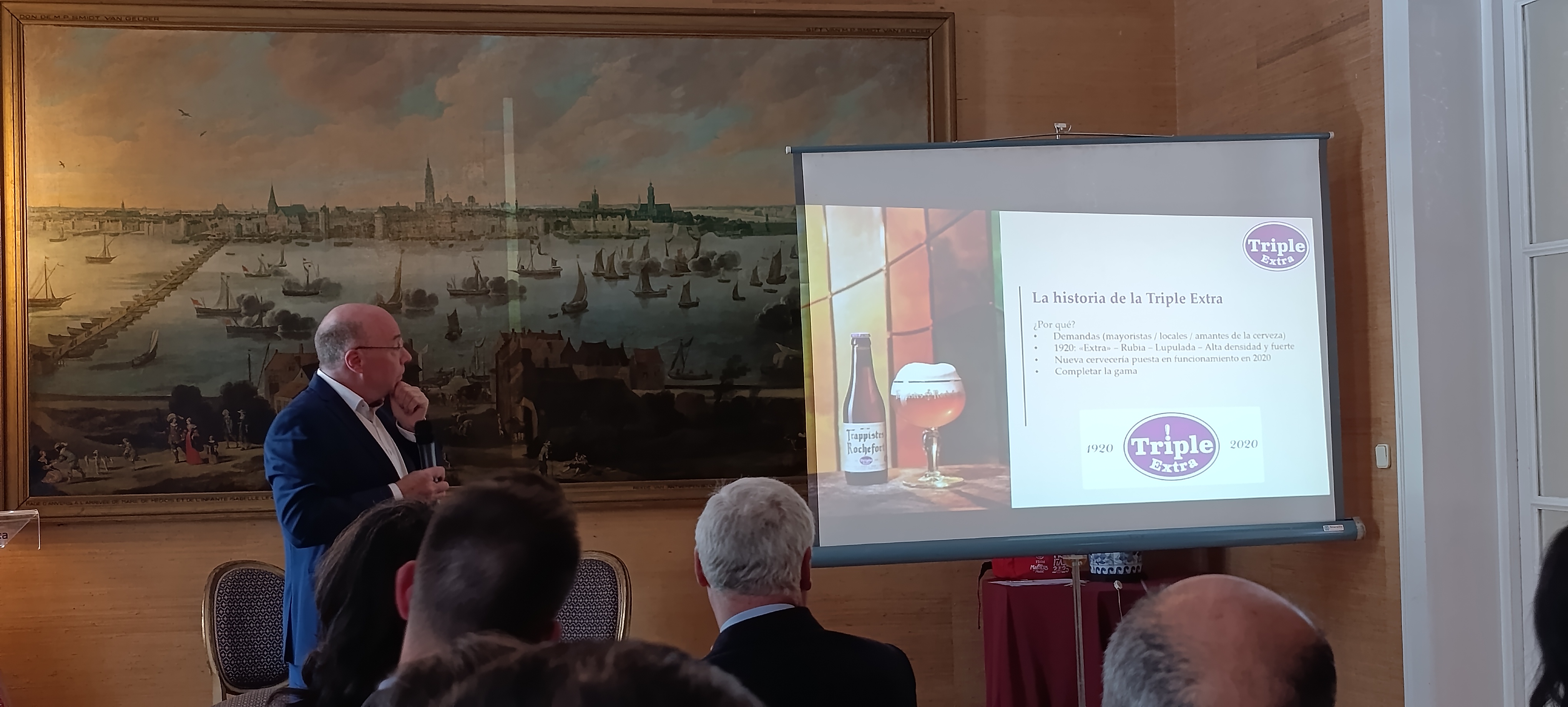
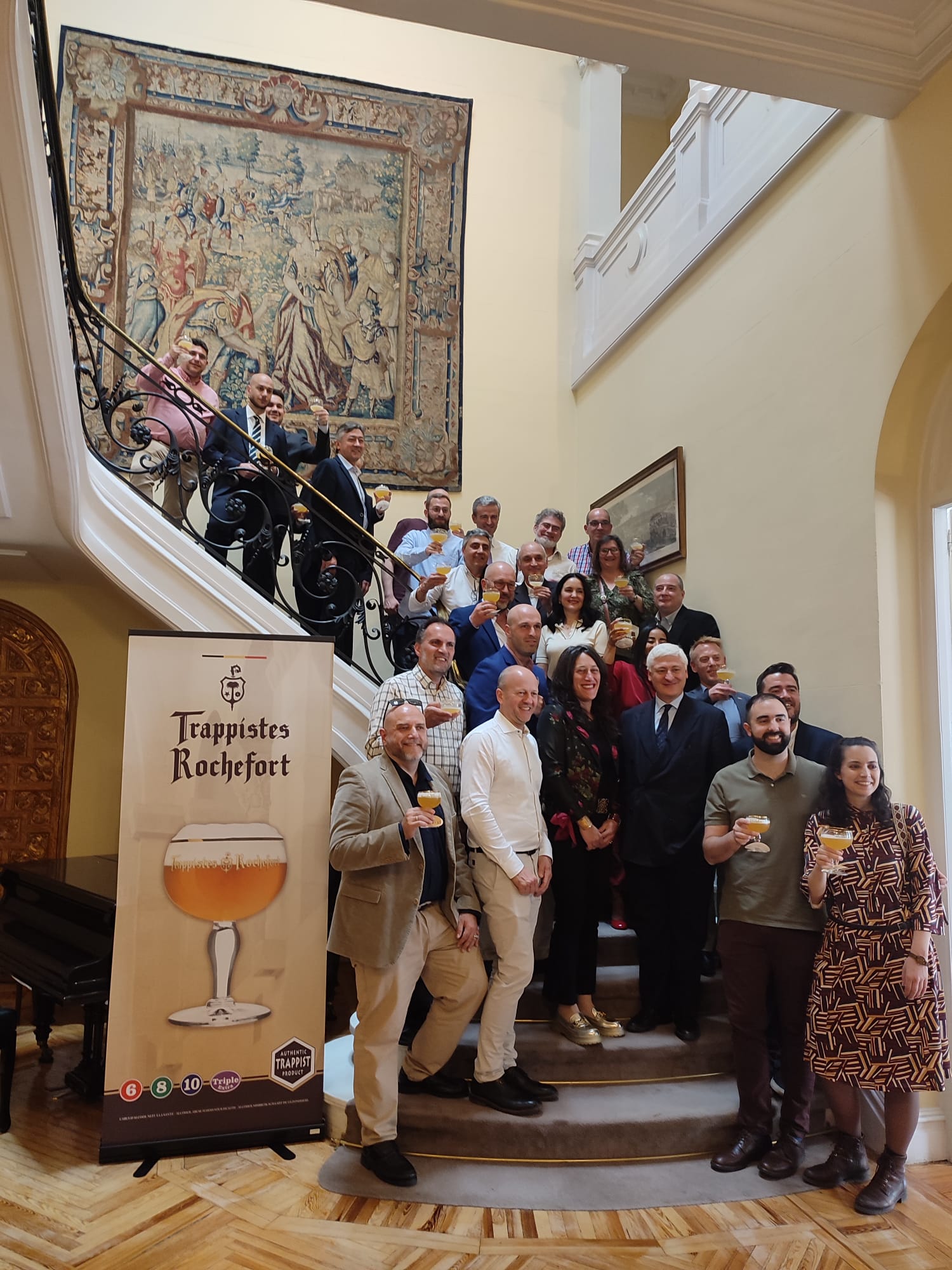
For this reason, the event held on April 15, 2026, at the Palacete del Marqués de Rafal in Madrid, the official residence of the Belgian ambassador to Spain, was all the more special. Organized by Rochefort, its local distributor Fine Beers, the Belgian embassy and the AWEX delegation in Spain, it served to present the local launch of Triple Extra beer in keg format, which will be available in four select Madrid bars specializing in international beers. This format, previously available only in select communities in countries such as Italy, France and the United States, has now arrived in Spain. Beer enthusiasts can now enjoy the freshness of this unique beer, a Belgian tripel with hints reminiscent of a witbier, as it is brewed with wheat malt, orange peel and spices.
Following a brief introduction by Didier Nagant de Deuxchaisnes, the Belgian ambassador to Spain, and Joan Roca, sales manager for Fine Beers, two key figures from Rochefort took the floor: production director François Mathy and brewmaster Gumer Santos. Through their presentation, we learned about the brewery's history, unique characteristics and details, in a captivating and engaging way that immediately drew the attention of all those present.
The event concluded, as expected, with a tasting of Rochefort Triple Extra in its new keg format, which stood out for its hoppy freshness, drinkability and balance, without sacrificing any of its character or punch. It has a slightly lower alcohol content than its bottled version, but even so, the beer proved to be an excellent choice for pairing with various savory and sweet dishes. It also enlivened the conversations at a pleasant beer networking event, which was also attended by Rochefort representatives, making it a delightful and memorable gathering for any Belgian beer enthusiast.
Nearly 800 years without giving up its personality
Although the 800th anniversary of the Abbey of Saint-Rémy is just around the corner, everything seems to indicate that the event will not change the style that has characterized the brewery throughout its history. No special new beers will be released to commemorate the date, as all of their beers have been and continue to be special since their creation. Because, as their brewmaster Gumer Santos maintains, "at Rochefort, we do not aim to make a perfect beer, but a beer with soul. The secret lies not in technology, but in knowing how to listen to what the yeast asks of us each day".

CTA
Sign up
Complete the application form and adhere to the Charter of Brand Ambassadors