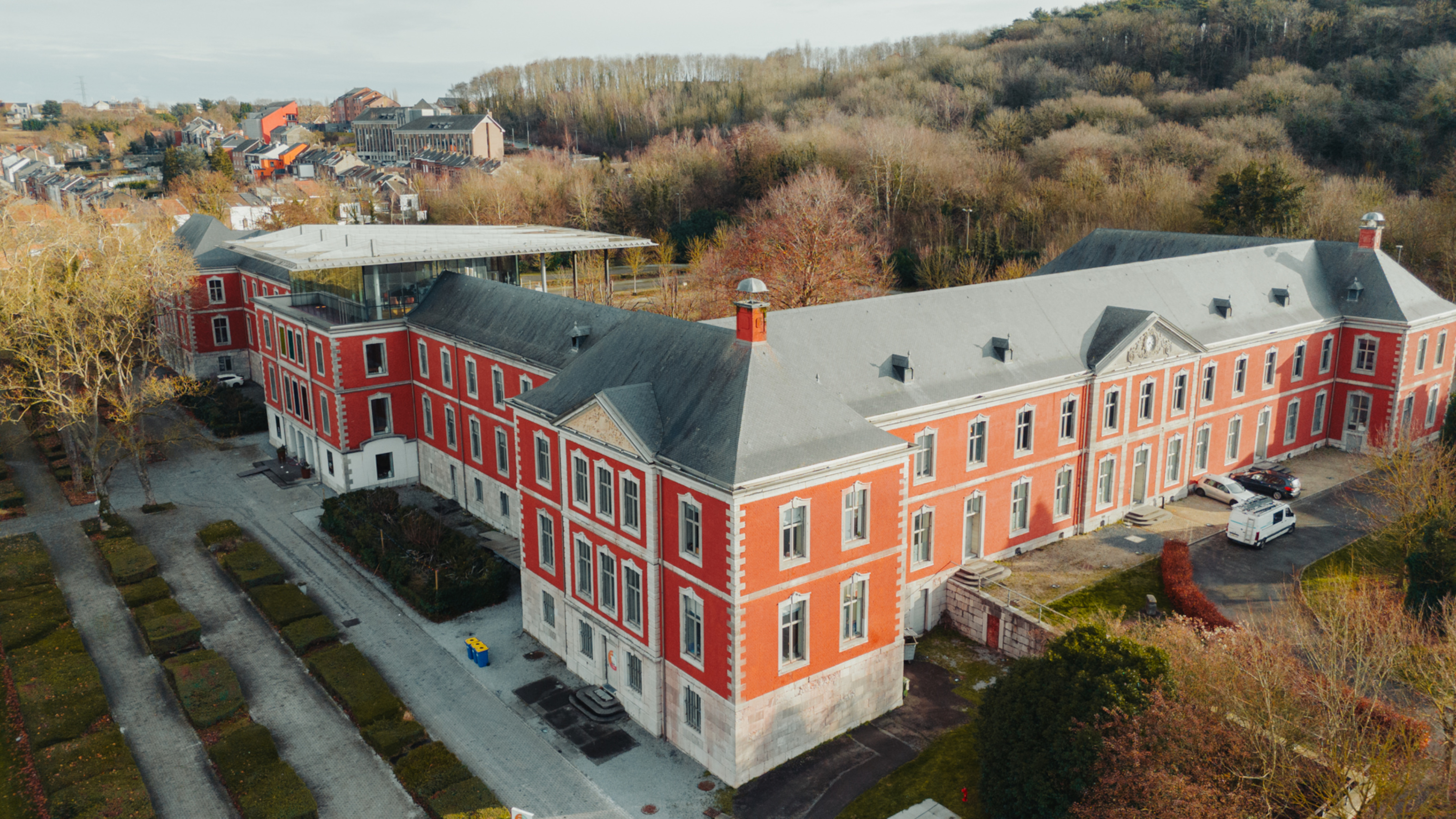
This bicentenary project, initiated by the Town of Seraing and led by the Uhoda Group, is part of a wider drive to revitalise and redevelop the site.
Nature in winter
Where the Meuse meanders in silvery curves and the chimneys of the industrial belt have long watched over the workers, stands the illustrious name of the Val Saint Lambert Crystalworks. Founded two centuries ago, this factory is not merely a workshop : it’s the voice of Seraing, a town on the outskirts of Liège, forged by coal and iron.
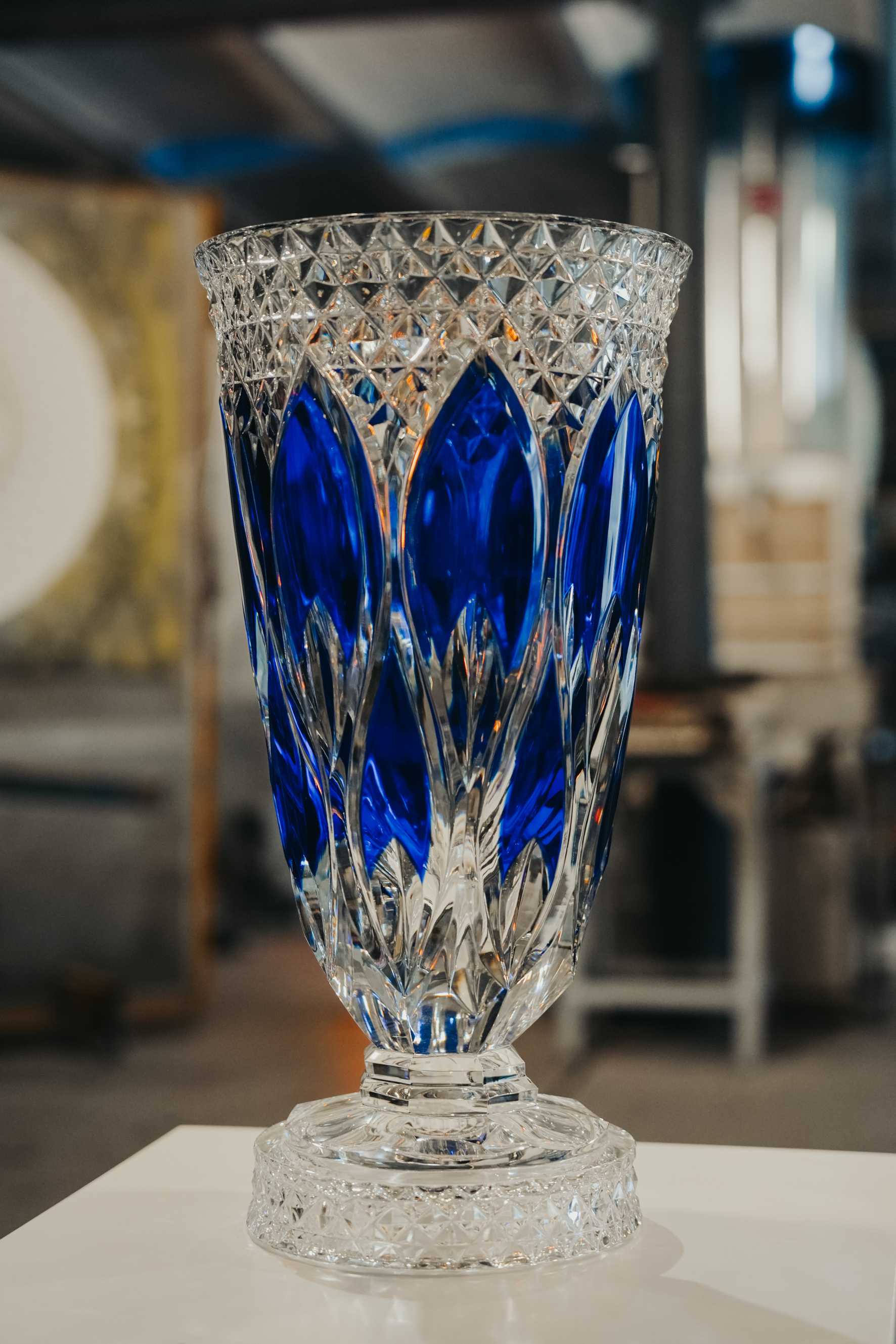
Perched like a lantern on the riverbank, Val Saint Lambert has long offered the world a transparent glimpse into an entire region. Here, crystal is not merely a decorative object: it is an act of collective creation, a social treasure, a symbol of elevation. From the dust of ore to the brilliance of crystal.
Since 1826, the Val Saint Lambert Crystalworks have occupied a skilfully renovated former Cistercian abbey, tracing a unique history where industrial expertise and artistic creativity intertwine. Founded by the chemist François Kemlin and the engineer Auguste Lelièvre, the company fired up its furnaces in May 1826 and soon became the benchmark for Belgian crystal, combining technical mastery with a taste for excellence.
The site itself offered favourable conditions : proximity to the Meuse for transport, abundant supplies of fuel and raw materials, and a rapidly expanding industrial hub in Liège. Very soon, Val Saint Lambert set itself apart through the purity of its crystal, its precise cuts, and its pieces that were both functional and sculptural. At the turn of the 19th and 20th centuries, the crystalworks enjoyed a golden age: high-quality mass production, international renown and a notable presence at the World’s Fairs, where its monumental vases and cut glass sets caused a sensation. Artistically, Val Saint Lambert has successfully navigated changing styles. From Art Nouveau to Art Deco lines, and on to modern collaborations (with local craftspeople and contemporary designers), the factory has reinvented its palette and techniques.
A moment of reaffirmation
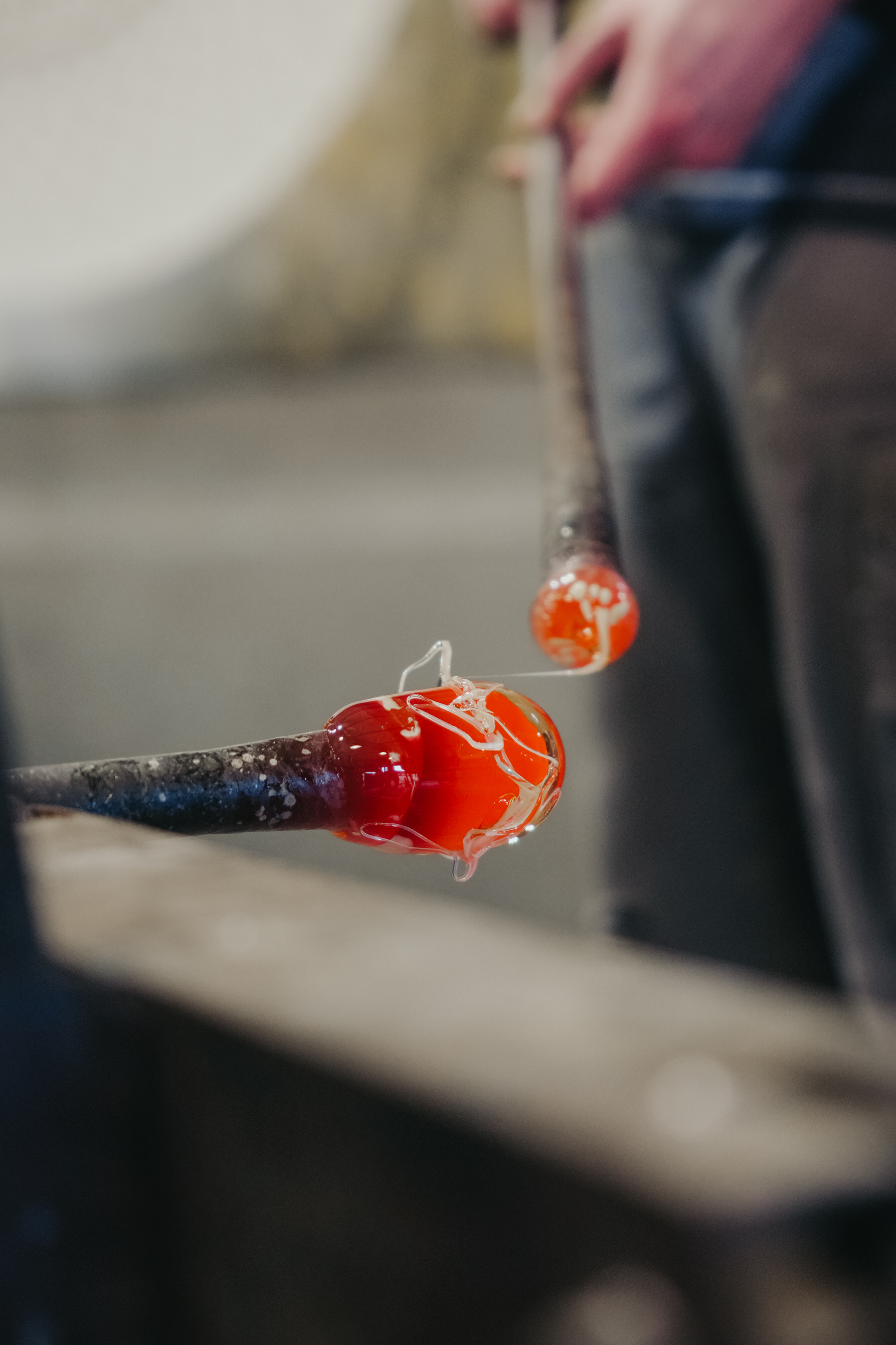
Today, Val Saint Lambert remains a symbol of ‘made in Belgium’ : workshops open to the public, glassblowing demonstrations (children can even blow their own Easter eggs there!) and a museum experience that helps visitors understand the techniques, furnaces and stages involved in transforming glass into precious objects. Despite economic upheavals and changes of ownership over the decades, the factory has retained its capacity to inspire wonder and its unique expertise. The bicentenary is therefore not merely a commemoration : it’s a time for reaffirmation. It raises questions about the passing on of trades, the sustainability of local craftsmanship, and the role of living heritage in our post-industrial towns.
Until 6 December 2026, Val Saint Lambert will roll out an exceptional programme, making the bicentenary a major highlight at the site. Conceived as a celebration that is both retrospective and forward-looking, this programme is based on three complementary pillars : a major exhibition dedicated to two centuries of creativity and craftsmanship, contemporary artistic reinterpretation through an immersive experience, and an immersive performance.
There will also be an extensive programme of events designed to bring the site to life throughout the year, ranging from contemporary art to initiatives centred on the culinary arts, alongside other cultural offerings accessible to all audiences, some of which will form part of major cultural and heritage events, such as Heritage Days
Initiated by the Town of Seraing and led by the Uhoda Group, this bicentenary project forms part of a wider drive to enhance and redevelop the site. It is also designed as a community-led, collective project, open to all cultural, economic, voluntary and institutional stakeholders keen to get involved.
The bicentenary aims to bring together partners and key players around a shared ambition: to make Val Saint Lambert a leading cultural, heritage and tourist destination in Wallonia and beyond.
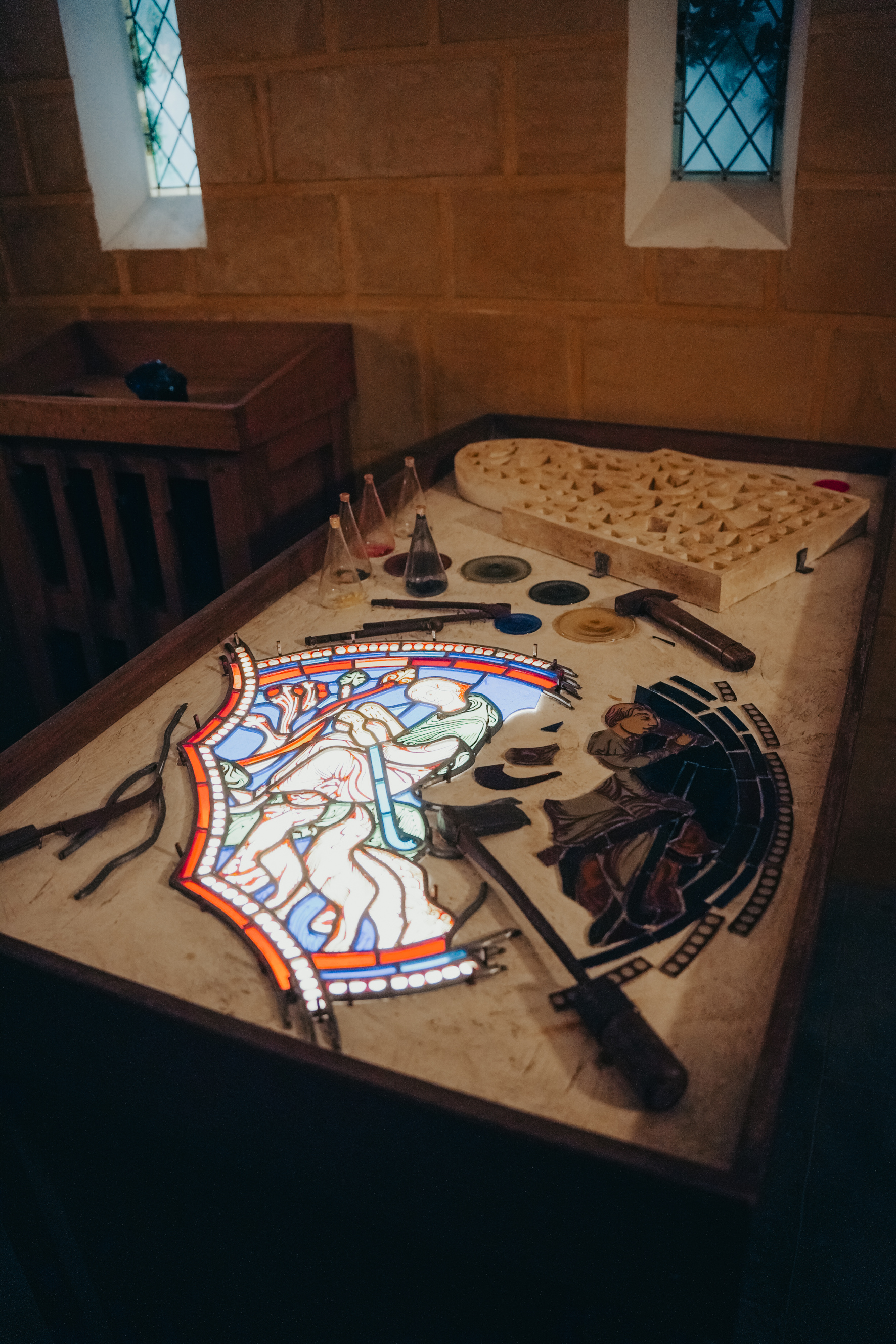
The anniversary exhibition will feature a completely revamped exhibition route, conceived and designed by Europa Expo, including the refurbishment of the permanent exhibition and the reopening of the immersive exhibition route with décors (in the basement). It will celebrate two centuries of creativity and international influence through a selection of iconic pieces by the leading designers who have shaped Val Saint Lambert’s reputation since the 19th century.
Beyond the works on display, the visit will also offer the chance to witness crystal being created, thanks to live glass-blowing demonstrations by artisans still working at Val Saint Lambert.
Two major immersive events
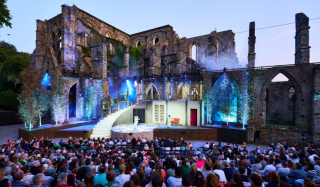
From the start of the bicentenary celebrations and for several months thereafter, Val Saint Lambert Abbey will be transformed to offer a 360° immersive experience conceived by Luc Petit, Cristal Memoria. Combining video mapping, sound and light, this sensory and emotional journey will bring to life two centuries of innovation, craftsmanship and memory, and will spectacularly complement a visit to the exhibition.
This autumn, Lumina Crystallis, an original and immersive production by Luc Petit himself, will transform the Abbey into a setting of light and poetry. Designed as a live, embodied performance, it will be performed by artists on stage, with bodies, voices and music at the heart of the experience. Monumental video projections will embrace the Abbey’s architecture, not as a static backdrop, but as a living entity, integrated into the drama and the narrative.
Beyond the celebration, the bicentenary marks a commitment to anchoring this glassmaking heritage in contemporary challenges: passing on craftsmanship, boosting tourism, and creating more contemporary works to attract new audiences. As we bring these two centuries of history to a close, one thing is clear : Seraing crystal is not merely a part of the region’s industrial past; it remains a living force in its future.
How is crystal made ?
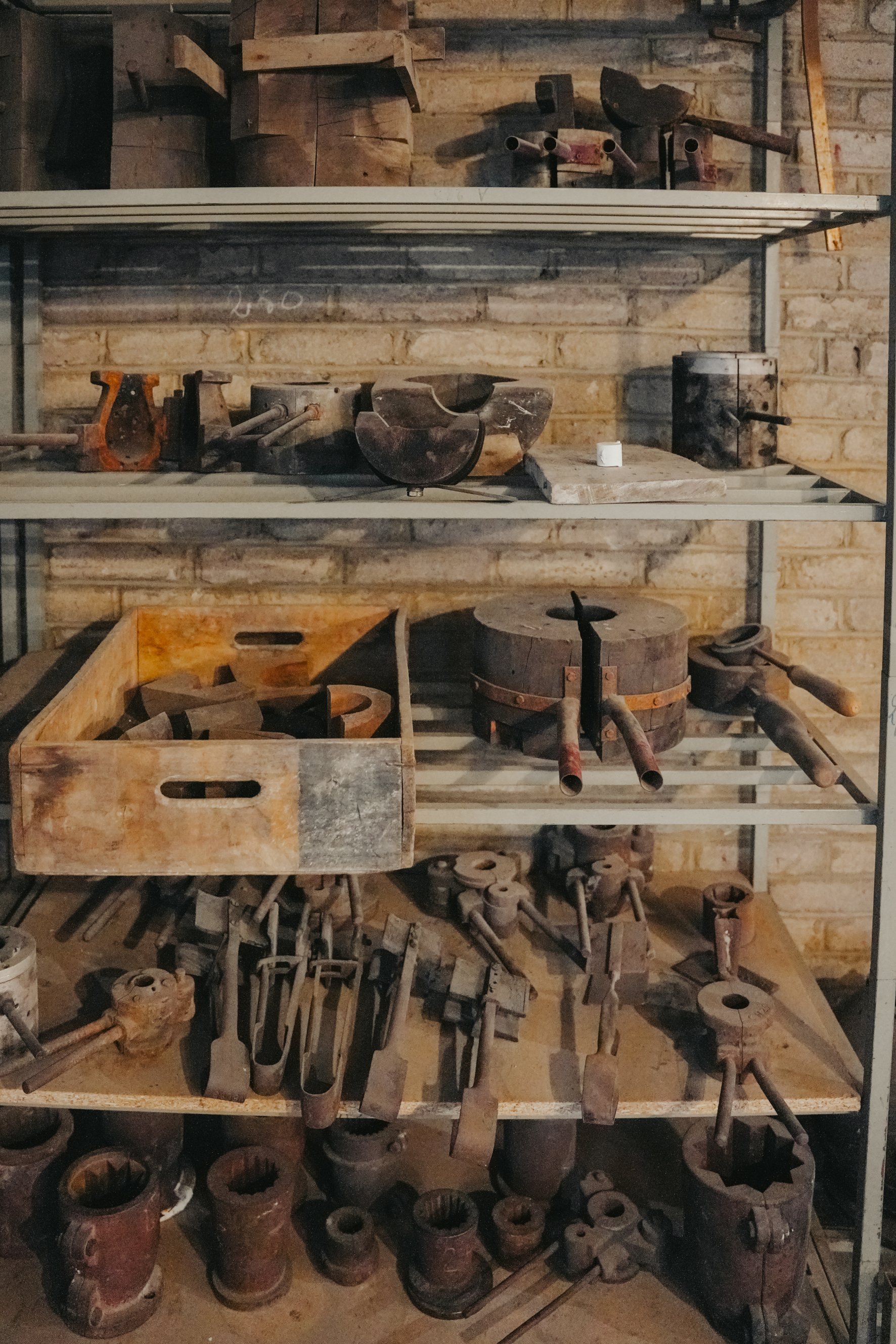
Crystal is a clear, brilliant material, characterised by the purity of its components, its refractive index and its density. The composition consists of three parts silica (in the form of extra-white sand), two parts lead minium, which enhance clarity and brilliance, one part potash, and a quantity of groisil (broken clear crystal), which aids the melting process.
It all begins with placing the raw material into the crucible at 1,400°C. This crucible is made from clay by potters using techniques that are more artisanal than industrial. To ensure the melting process takes place under the best possible conditions, the crucible must be completely free of cracks. Its lifespan is short, as it needs to be replaced after a few weeks. The crystal will be ready for working between 24 and 48 hours after being placed in the furnace.
Louis Leloup (1929–2025) : the samurai of crystal
An iconic master glassmaker at the Val Saint Lambert Crystalworks, Louis Leloup was born in Seraing in 1929 and began his apprenticeship there at the age of 17, choosing crystal over a career in opera at the Conservatoire. From 1958 to 1971, he taught at the École des Cristalleries and invented the multi-rod blowing technique, enabling the creation of monumental sculptures deemed impossible at the time, such as a 70-kg floor lamp exhibited in Brussels in 1958. After falling out with the management in 1971, he founded his own independent studio in Neupré, where he created colourful and powerful works, including the Madonna of the Queen, presented to Fabiola in 1965, which are celebrated worldwide. There is even a museum dedicated to him in Kyoto. He passed away in 2025 at the age of 96, yet his legacy continues to shine a light on the revival of Val Saint Lambert.
Also coming up
18 April 2026 to 27 September 2026
‘Art Deco and Modernism at Val Saint Lambert (1925–1939)’ at the Musée des Beaux-Arts de Charleroi
An exhibition by the Musée du Verre de Marcinelle – Charleroi as part of the bicentenary of the Val Saint Lambert Crystalworks.
The year 2026 marks the bicentenary of the famous Val Saint Lambert Crystalworks. Given their significance in Belgian history and the nation’s collective identity, the Musée du Verre de Charleroi has joined forces with other scientific institutions and museums to offer a wide-ranging programme of exhibitions to (re)discover this jewel of Belgian industry. Far from being chronological, this event aims to immerse visitors in the atmosphere of the interwar period, when, little by little, the curved lines of Art Nouveau gave way to the stricter forms of Art Deco, which would evolve into clearly geometric forms at the dawn of the 1940s.
17 April 2026 to 27 September 2026
‘Japonisme & Art Nouveau exhibition’ – Bicentenary of the Val Saint Lambert Crystalworks (1826–2026) – Grand Curtius Museum, Liège
Through works produced between the 1880s and 1914, the exhibition highlights the importance and originality of the key figures in the Val Lambert Design Department, as well as the expertise of the craftspeople who, together, have built the manufactory’s global reputation. An outstanding artist, Léon Ledru – a lover of Oriental and Orientalist art and a dynamic figure who moved in artistic circles in both Liège and Paris – is given special prominence within the exhibition. Around 150 works showcasing the aesthetics and techniques experimented with and developed by Val Saint Lambert during this period are on display. Alongside pieces from the Grand Curtius are items from private collections. The exhibition is enriched by Belle Époque works from the City of Liège’s museum collections: paintings, posters, furniture... The Art Nouveau aesthetic also extends to tableware, hygiene and beauty products, decorative items and lighting.
24 April 2026 to 25 October 2026
‘Val Saint Lambert & Design exhibition’ – Design Museum Brussels
To mark the bicentenary of the Val Saint Lambert Crystalworks, the Design Museum Brussels is joining forces with several museums and scientific institutions to highlight this jewel of Belgian creativity and industrial heritage. In collaboration with the Musée du Verre de Charleroi, the exhibition ‘Val Saint Lambert & Design’ focuses on the creative output of Val Saint Lambert, spanning from the 1958 World’s Fair to the early 2000s — a period that reflects an unprecedented creative renewal. It embodies Val Saint Lambert’s commitment to preserving craftsmanship whilst embedding it in modernity and maintaining a constant dialogue with design. In the tradition of the American Studio Glass movement, it opened its doors to international artists and designers who, alongside the crystalworks’ master glassmakers, experimented with new forms and pushed the boundaries of creation. Crystal, a material symbolising artisanal excellence, thus became the medium for bold creations, combining traditional craftsmanship with aesthetic innovations. Founded in 1989, Studio Cristal marked a decisive milestone in the history of Val Saint Lambert. Through this joint exhibition, the Design Museum Brussels and the Musée du Verre de Charleroi invite their audiences to discover Studio Cristal, a reflection of the dynamism, innovation and international influence of the Val Saint Lambert Crystalworks.
This article was written by Philippe Vandenbergh for W+B Magazine No. 171 – Spring 2026.