In recent weeks, the Walloon company Spacebel, which specialises in software engineering for space systems, secured a new contract as part of EnVision, the future European scientific mission to explore Venus. Its software will travel on board the probe, which is expected to leave Earth no earlier than November 2031.
A strategic component of European defence
Behind these civil and scientific projects, however, another reality is now emerging. Space has become a major strategic issue for European states. And the Belgian space sector is determined to play its part in this new race for sovereignty.
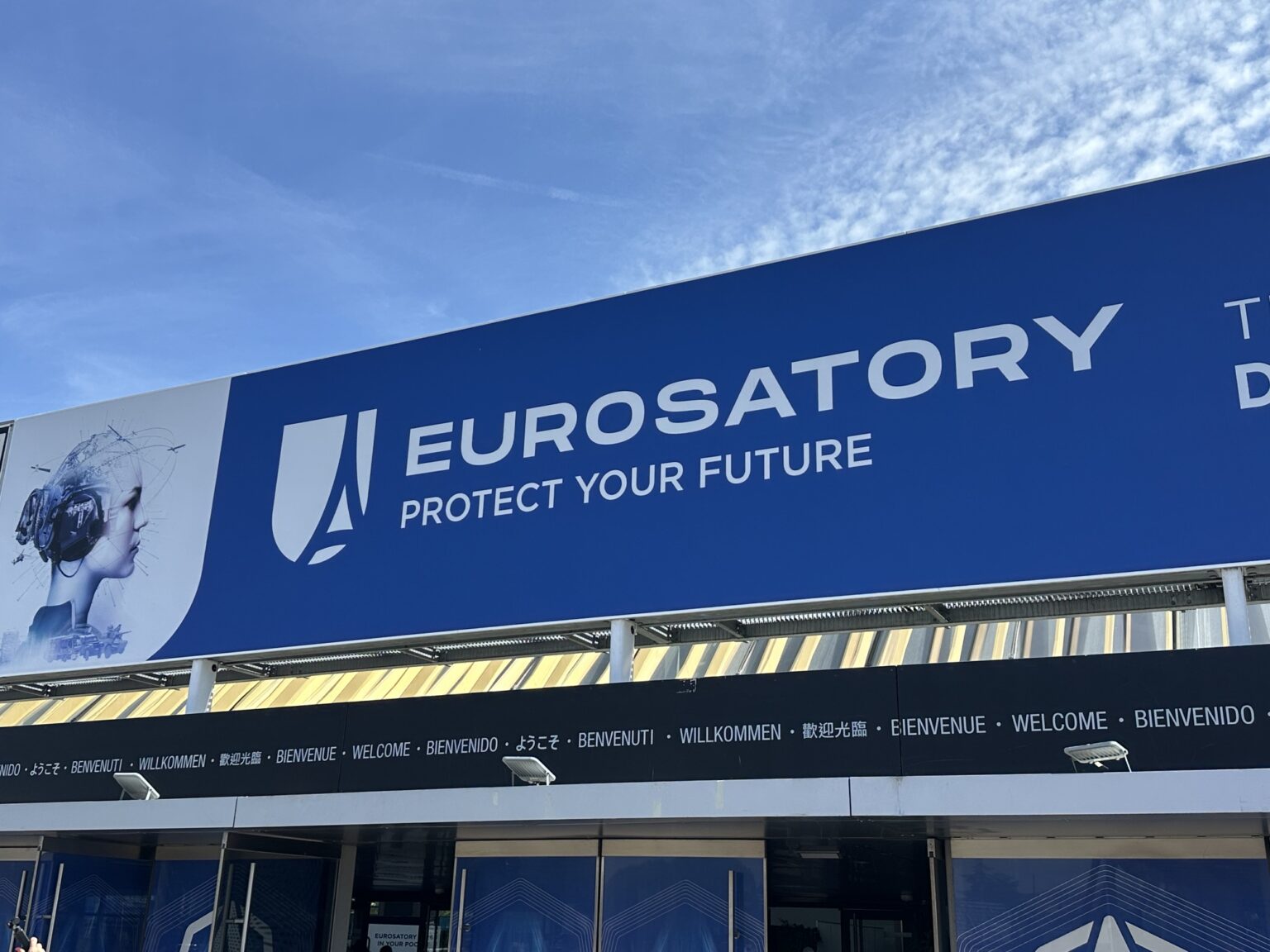
The symbol of this evolution can be found in Paris, at Eurosatory, one of the world’s largest events dedicated to defence and security.
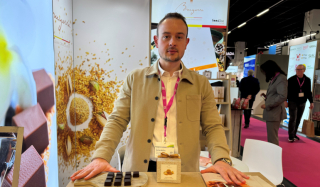
Among the exhibitors present on the booth of the Wallonia Export & Investment Agency (AWEX) is Eric Lardinois, CEO of Spacebel. “Conflicts are also being played out in space through the control of communications, information and images.”
For the general public, space is still often associated with weather satellites, GPS navigation or scientific missions. Yet modern armies now depend heavily on space infrastructure. Satellites make it possible to observe conflict zones, secure communications, monitor critical infrastructure and guide certain operations.
The dual nature of space systems
This transformation is profoundly reshaping the priorities of the European space sector. At Spacebel, it is reflected in a clear ambition to further develop defence and security-related activities. Appointed to head the company in 2024, Eric Lardinois worked with his predecessor to draw up a growth strategy for the 2026–2030 period. One of its key pillars is “defence space”.
The company already has experience in this field. It has taken part in several programmes linked to the French military satellites Hélios and CSO and works with the Belgian Defence Geospatial Centre to exploit data from Earth observation. The difference between the past and today is that these activities are no longer regarded as marginal.
Objectives focused on resilience, protection and security
To support this shift, Spacebel has recruited a dedicated manager responsible for developing its defence and security activities. This move reflects the growing importance of this market.
“We are not involved in offensive or lethal systems,” explains Eric Lardinois. “We want to put our expertise at the service of protection, resilience and security.”
This distinction reflects an essential feature of modern space: the boundary between civilian and military use is often blurred. A technology developed to monitor the environment can also be used to observe a conflict zone. A system designed to manage a natural disaster can be used during a military operation. The satellites themselves remain fundamentally the same. It is their missions that evolve.
A Walloon roadmap
It is precisely this concept of “duality” that is now prompting the entire Walloon ecosystem to organise itself. Skywin, the Walloon competitiveness cluster bringing together companies, research centres and universities active in aeronautics, space and defence, has just drawn up a roadmap dedicated to “Space4Defence”.
“When we built our first space strategy, this dimension was not yet at the heart of our concerns,” explains Agnès Grandjean, Director of the International Department at Skywin. “Since then, things have evolved enormously.”
The European Union has gradually integrated space into its strategic thinking. NATO now considers space to be an operational domain in its own right. And the war in Ukraine has highlighted the extent to which space capabilities have become essential in contemporary conflicts. Faced with this new reality, Skywin is seeking to identify the areas in which Wallonia has specific strengths.
Earth observation is among the most recognised areas of expertise. Thanks to satellites capable of collecting images and data, it is possible to monitor the environment, infrastructure and natural resources. These capabilities are of interest to both civilian authorities and defence stakeholders.
Software is another strength of Walloon industry. Companies such as Spacebel develop the programmes that ensure the operation of satellites and space launchers. This expertise has become strategic as space systems grow increasingly complex.
Artificial intelligence is further reinforcing this trend. The volumes of data collected from space are constantly increasing and must be analysed ever more rapidly.
Typically military constraints
“In the defence field, requirements call for near real time,” continues Eric Lardinois. “Information must be available almost instantly to enable effective decision-making.”
This requirement is changing the way software is designed. Some data processing must now be carried out directly on board satellites, even before the information is transmitted back to Earth.
Wallonia also has longstanding expertise in European space launchers. Several regional companies contribute to the Ariane and Vega programmes by supplying critical components. This know-how has become particularly valuable at a time when Europe is seeking to guarantee autonomous access to space.
The end of space cooperation with Russia following the invasion of Ukraine highlighted the fragility of certain strategic dependencies. Since then, European autonomy has become a priority in many areas, including space.
For Belgian companies, this evolution opens up new prospects. At Spacebel, the ambition is to grow defence-space activities until they account for around 20% of turnover, while continuing to support the major scientific programmes on which the company built its reputation.
By Christian Du Brulle, Daily Science
Linked articles
Related articles
KIKK Festival 2026: 10 Walloon companies from the CCI sector expand their international network

Enjoy a cosy autumn with the brand-new WAB magazine

Casa Vallonia: Italy discovers Walloon green technologies