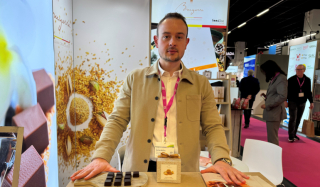
From 20 to 22 October, key players from the biocontrol industry will gather in Basel, Switzerland, for ABIM. In 2026, 11 Walloon companies will take part in this major annual international meeting for the biocontrol industry, alongside Wallonia Export & Investment Agency and Wagralim, showcasing Wallonia’s expertise in sustainable agriculture.
Supported by a network of innovative companies, Wallonia is positioning itself at the forefront of sustainable agricultural practices, particularly in the development of biocontrol solutions, biostimulants and biofertilisers.
With 44% of its territory devoted to agriculture, the region provides an ideal environment for developing and testing new solutions. It also benefits from a strong ecosystem of R&D centres, universities and institutions specialising in agricultural and food technologies, as well as a highly skilled workforce.
This expertise is also gaining recognition at European level. Since June 2025, Wallonia has been spearheading the European “Biosolutions for Sustainable Agriculture” network, coordinated by Wagralim. The network brings together 10 innovation clusters from seven European Union countries working in the fields of biocontrol, biostimulants and biofertilisers.
Biocontrol, biostimulants and biofertilisers: what are they?
Biocontrol encompasses plant protection solutions based on natural mechanisms that provide alternatives to conventional plant protection products. Biostimulants and biofertilisers, meanwhile, help improve plant growth, vigour and resilience.
From crop protection to growth enhancement, these biosolutions therefore offer a wide range of applications to support the transition towards more sustainable agriculture.
Walloon companies participating in ABIM 2026
Eight companies will be present at ABIM in Basel, Switzerland, on the Wallonia Export & Investment Agency stand (4.0 070), organised in partnership with Wagralim. Three other Walloon companies will also be exhibiting independently: FYTEKO (4.0 056), FYTOFEND (4.0 069) and KITOZYME (4.1119).
A specialist in regulatory affairs, Redebel Regulatory Affairs (RRA) supports companies with the approval and registration of plant protection and plant nutrition products, biostimulants, fertilisers and biocides in Europe. Drawing on more than 30 years of expertise, its team provides support in areas including toxicology, ecotoxicology and environmental fate, from defining the regulatory strategy through to dossier preparation, submission and follow-up.
Rhizome Network simplifies the implementation of agricultural trials on an international scale. The company coordinates GEP and GLP programmes through a network of more than 80 contract research organisations across more than 50 countries. A single point of contact, contract and invoice are all that is needed to manage an entire programme, with harmonised protocols and reports as well as real-time data collection via a dedicated platform.
Founded in 2020, Agricells develops microbial biostimulants designed to reduce the use of chemical inputs without compromising crop yields. Its technology is based in particular on a patented strain of Bacillus amyloliquefaciens, which promotes root development and improves the availability of phosphorus and nitrogen. Tested in more than 100 field trials, its solutions have delivered an average yield increase of 11% and are already available on several continents.
A spin-off from Gembloux Agro-Bio Tech, Artechno has been developing and producing micro-organisms since 1999 for applications including agriculture, animal nutrition, health and the environment. This independent, family-owned company has its own R&D laboratory and more than 20 m³ of fermentation capacity, complemented by spray-drying and freeze-drying equipment. Its expertise enables it to develop natural microbiological solutions tailored to a wide range of applications.
APEO, a spin-off from Gembloux Agro-Bio Tech, is turning ten years of research into essential oils into natural, patented biological herbicides. The company develops alternatives to glyphosate and manages the entire development process, from identifying active substances to field trials and the regulatory procedures required for commercialisation.
BiocSol, a spin-off from UCLouvain, focuses on tackling crop diseases. Its technology uses natural substances produced by beneficial micro-organisms, without the micro-organisms themselves being present in the final product. Its portfolio targets diseases including potato late blight and early blight, as well as grapevine downy mildew, with the aim of providing effective, stable and residue-free crop protection.
Specialising in green chemistry, Minagro develops bio-based co-formulants—including preservatives, adjuvants and solvents—particularly for manufacturers of agricultural products. Using renewable raw materials such as sugarcane bagasse and essential oils, the company helps industry improve its formulations while reducing their environmental footprint.
Weexa produces biological solutions, including micro-organisms and plant-extract-based products. The company specialises in the fermentation of micro-organisms and the formulation of plant-extract-based products for use as biological solutions in agriculture.
At Fyteko, innovation focuses on strengthening crop resilience to climate-related stress. The company develops patented, bio-based biomolecules that help plants cope more effectively with challenging conditions. Its technology has already been evaluated in more than 800 real-world trials, and its solutions were applied across more than 500,000 hectares in 2024–2025.
FytoFend has been developing natural biosolutions to protect crops and stimulate their natural defences since 2009. Among its innovations are solutions based on COS-OGA, the first low-risk active substance approved by the European Union. From research and production to registration, the company manages the entire product development process. Its solutions are certified for organic farming and are currently distributed in more than 40 countries.
KitoZyme specialises in the production of natural biopolymers and is a global leader in fungal chitosan. Unlike conventional chitosan, which is traditionally derived from animal sources, its ingredients are extracted exclusively from fungi. The company develops sustainable chitosan- and chitin-glucan-based solutions for a range of sectors, including agriculture, healthcare, winemaking and cosmetics.
Isabelle Anneet (AWEX)
Linked articles
Related articles

KIKK Festival 2026: 10 Walloon companies from the CCI sector expand their international network

Enjoy a cosy autumn with the brand-new WAB magazine

Casa Vallonia: Italy discovers Walloon green technologies