In Caster, above the Albert Canal, and in Sainte-Cécile, in the Semois Valley, two new suspension footbridges offer walkers a different way to discover Wallonia. These two spectacular, vertiginous structures reconnect areas and are already attracting visitors.
They sway beneath your feet, play with vertigo and offer a unique view of the landscape. In Caster, above the Albert Canal, and in Sainte-Cécile, in the Semois Valley, two suspension footbridges invite walkers to discover Wallonia in a different way. They are already proving a success.
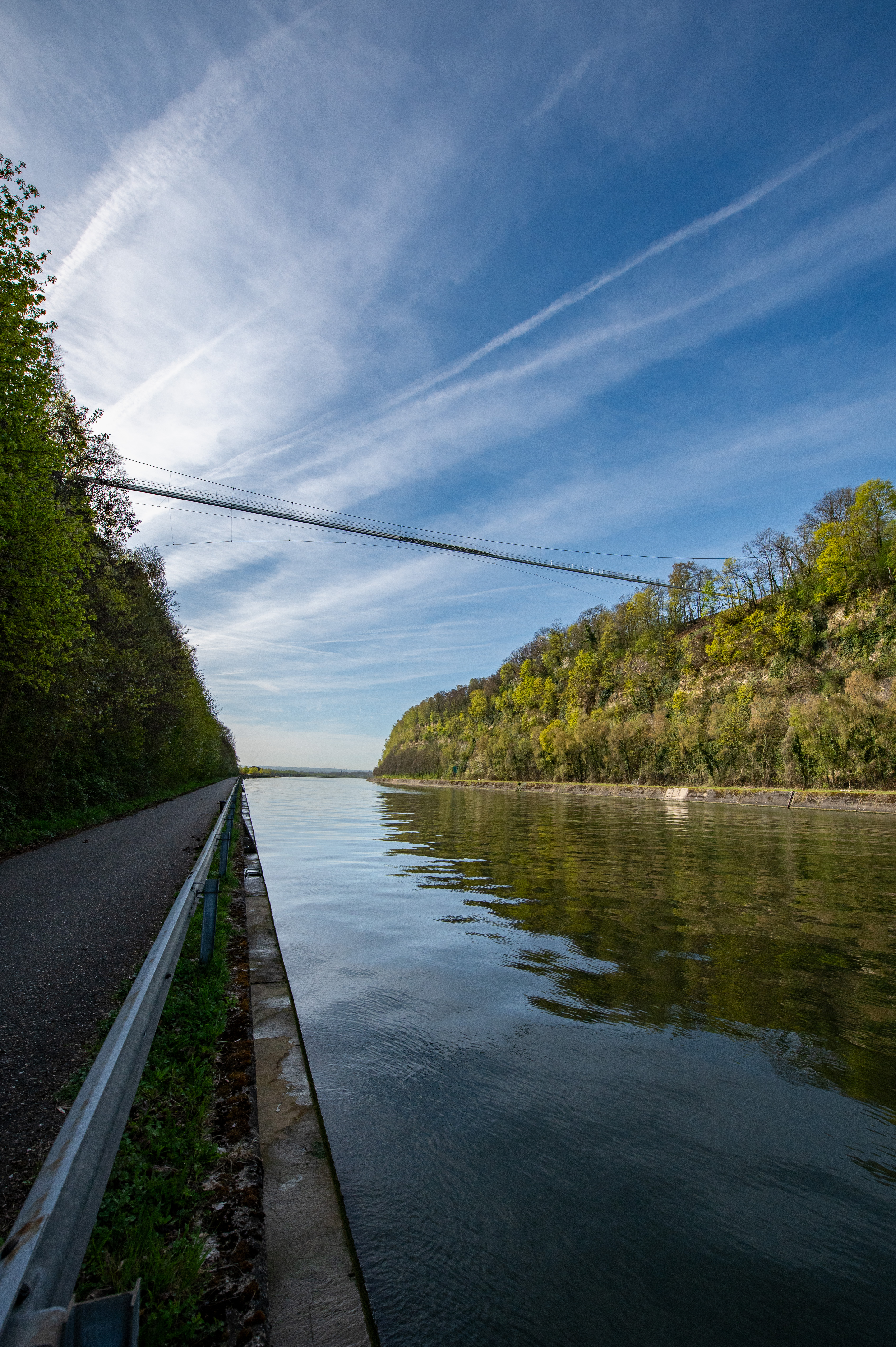
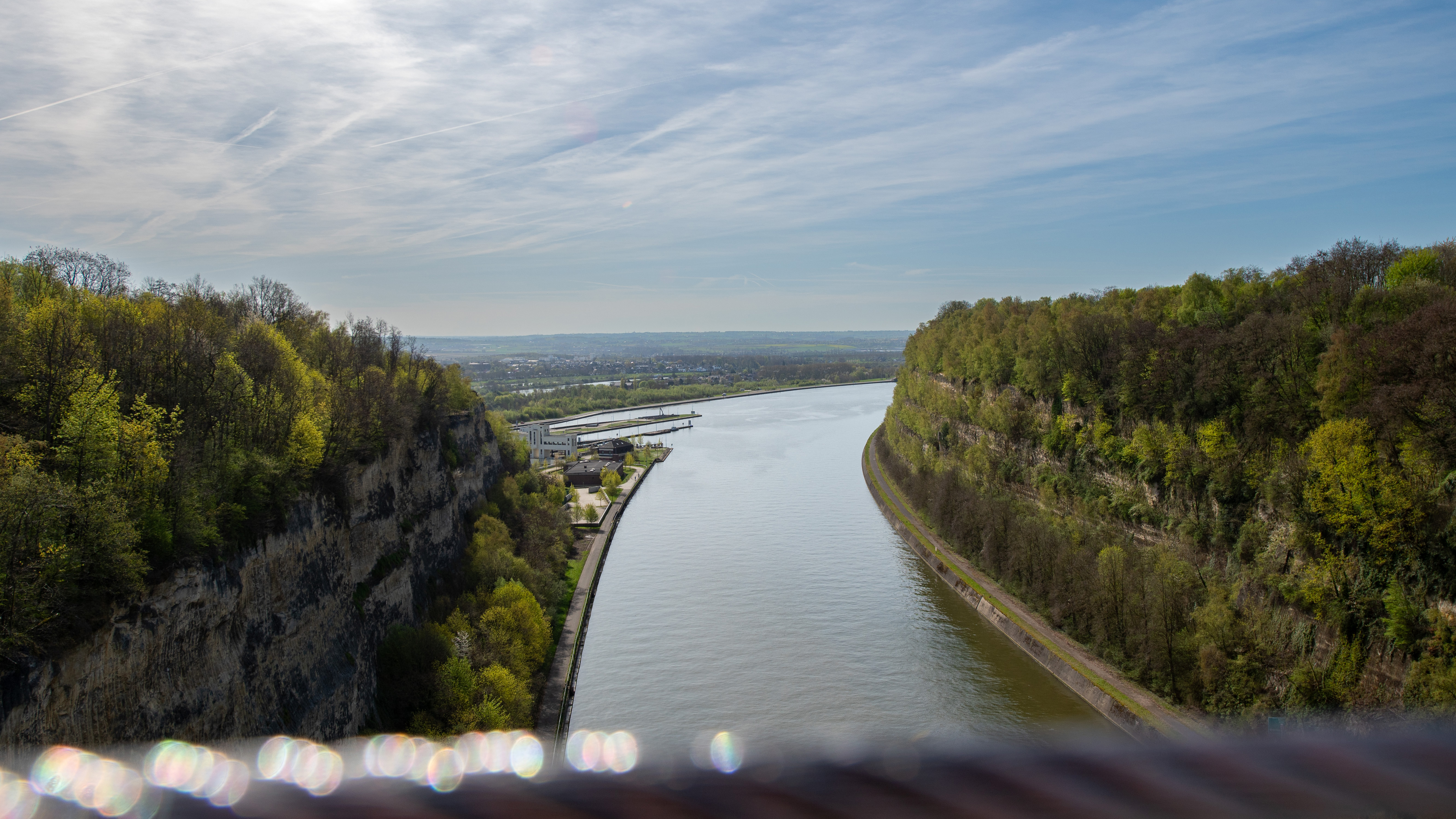
A first step. Then a second. Beneath your feet, the wooden planks allow a glimpse of the void below. Very quickly, the ground seems to shift. “It sways, it moves,” remark visitors to the Caster footbridge. Fifty metres below, barges continue their journey along the Albert Canal. For some, the crossing is a mere formality. For others, it begins with a hand on the railing. But halfway across, the instinct is the same: to stop and take in the view of the Caster Trench, the Albert Canal and the cliffs of Montagne Saint-Pierre.
Opened at the end of April 2026, the footbridge has already become a must-see attraction in the region. In just under four months, some 70,000 people had already crossed it, an average of more than 550 visitors a day. “They are mainly Dutch-speakers, but we also have Germans, Spaniards and Poles,” explains Ernur Colak, chairman of the multi-municipal non-profit organisation Vialta – which manages the site – and Visé’s alderman for tourism.
A rediscovered path
The footbridge also tells a piece of history. Until the 1930s, a route linked Liège to Maastricht via Montagne Saint-Pierre. The excavation of the Albert Canal severed this link and separated the two plateaus.
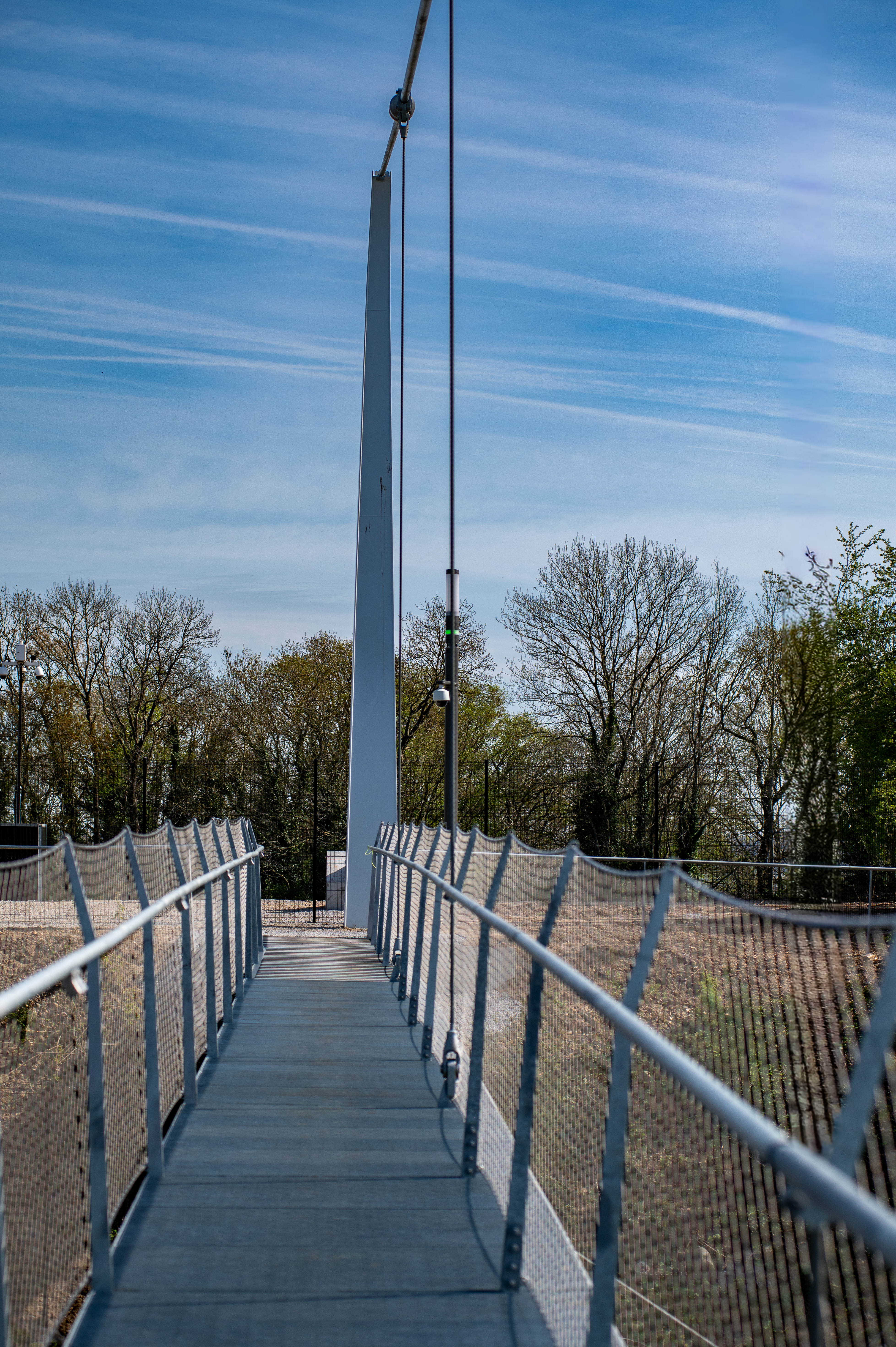
Almost a century later, walkers can once again cross from one to the other. Measuring 195 metres in length and reserved for pedestrians, the footbridge links the heights of Bassenge and Visé, in the immediate vicinity of Flanders and the Netherlands. This project is, in fact, part of a wider initiative for a cross-border park linking Maastricht, Eijsden-Margraten and Riemst, all of which have been involved in the project. Measuring 1.20 metres wide at either end, it widens to 2.50 metres in the centre over a distance of around thirty metres, allowing visitors to stop and fully enjoy the outstanding natural landscape
On the ground, Montagne Saint-Pierre combines chalk cliffs, limestone grasslands, former quarries and traces of a long human history. Forming part of the Geer and Meuse Border Park, the footbridge can serve as the starting point for a walk to Eben-Emael Fort, the Villa Castrum – a nature visitor centre run by environmental organisations – Lanaye and its locks, the Geer Valley or Maastricht.
The aim is to attract visitors via the footbridge and inspire them to explore the region. However, success has its downside. The limestone grasslands are home to exceptional biodiversity and would struggle to cope with an uncontrolled influx of visitors. Access therefore costs €3. This fee aims to strengthen the protection and expansion of the nature reserve, whilst regulating visitor numbers.
A footbridge amongst the trees
150 kilometres away, the scenery changes: no more canal or limestone cliffs. Here, the forest and the river dominate the landscape.
Since 20 June, a second Himalayan-style footbridge has been welcoming walkers to Sainte-Cécile, in the municipality of Florenville. Measuring 185 metres in length, it links the Sainte-Cécile forest to the Domaine des Épioux, spanning the Semois river at a height of nearly 30 metres.
From the very first weekend, curious visitors turned up. “We often enjoy hiking around here. This footbridge will enable us to explore other routes, cross from one bank to the other and enjoy both sides of the Semois,” visitors told us. That’s the whole point: the footbridge isn’t just there to provide a thrill. It connects the two sides of the valley and forms part of existing walking routes, notably the GR16 and GR129. The former follows the Semois river for much of its course, whilst the latter crosses Belgium from north to south.
The Semois river seen from above
Here, the view plunges down towards the Semois river before rising again towards slopes that are almost entirely wooded. The structure, light and transparent, blends discreetly into the landscape. Its slatted decking and stainless-steel railing maintain that sensation of being suspended above the valley.
Planned for several years, its construction posed a challenge in a steep and difficult-to-access environment. But the significance goes beyond the footbridge itself. Sainte-Cécile lies at the heart of the Semois Valley National Park, where tourism centres on walking, the scenery and the villages. Chassepierre, Martué, Muno and Sainte-Cécile are all possible stops along the way. Florenville and Orval Abbey offer opportunities to extend your stay.
Here, even more so than in Caster, it is part of a ‘slow tourism’ approach: walking, crossing to the other bank, stopping in a village and carrying on. “The aim is to attract people, to further develop our shops, the hospitality sector, accommodation and overnight stays, so that the whole municipality can thrive thanks to this footbridge, and well beyond,” explains Camille Maitrejean, mayor of Florenville.
Come for the footbridge, stay for the region
In Caster, as in Sainte-Cécile, the spectacular structure is a draw. People come first and foremost to walk above the void. But the aim is for the visit not to end after 195 or 185 metres.
A footpath, a viewing point or a footbridge can become a destination in its own right if it offers a different perspective on the landscape. They offer a taste of adventure without requiring any particular level of fitness or specialised equipment. Photogenic by nature, they also benefit from social media. The 70,000 visitors recorded at Caster in less than four months are already a good illustration of this.
But above all, they reconnect areas. At Caster, a few hundred metres of metal symbolically bridge a divide that has existed for nearly a century. At Sainte-Cécile, they enable walkers to cross a steep-sided valley and create new circular walking routes.
The Caster footbridge cost around €2.1 million and was 80% funded by Wallonia as part of the Recovery Plan, with the remainder covered by the partner local authorities. The Sainte-Cécile footbridge cost around €1.4 million and also received regional support.
Two sides of Wallonia at your feet
The hardest part remains: balancing tourism success with the preservation of these sites. The more popular the two footbridges become, the more essential it is to manage visitor numbers, parking, footpaths and biodiversity.
This paradox sums up the expectations of the tourism sector: attracting more people to areas where visitors come specifically to seek peace and nature.
Caster and Sainte-Cécile offer two different facets of Wallonia. North of Liège, walkers look out over a border landscape shaped by geology, the Albert Canal and industrial history. In the far south, they find themselves suspended amidst a sea of trees, with the Semois river winding beneath their feet.
Two settings, then, two histories, but the same invitation: to leave the car behind for a few hours, put on your walking shoes and head for higher ground. Although, once you reach the middle of the footbridge, it might be better to look at the landscape rather than your feet!
This article was written by Rodolphe Masuy for Revue W+B No. 173, published by Wallonie-Bruxelles International.