With 48 teams playing 104 games in 3 countries, the 2026 FIFA World Cup is the biggest in the history of the sport — and several Walloon companies are key to the event. Whether working at the heart of the technical setup, operating just out of view, or gearing up for the next event, companies from Liège to Charleroi are creating the visuals, lighting up the stadiums, and bringing the stands to life at an event watched by billions.
EVS AND DELTACAST bringing images to the world from Liege
No modern sport, especially football, can forego slow motion technology. Since 1994, Liège-based EVS has mastered this awe-inspiring effect, which was made famous during the 1998 World Cup and has been used ever since by the biggest international sporting events. EVS has certainly not lost its touch since, as it won the contract with HBS, the host broadcaster for the tournament, to cover all 104 games. From slow-mo and action replays to content management and distribution, EVS provides a complete technological and service ecosystem. “This World Cup notably includes VIA MAP, a platform that enables the remote production and management of content to be centralised in London, thereby avoiding the need to move whole teams to the American continent,” CEO Serge Van Herck said, “it is the first time this technology has been used on such a scale.” EVS teams are working within the system both on site and remotely. Their promise: “Delivering excitement for billions of viewers.”
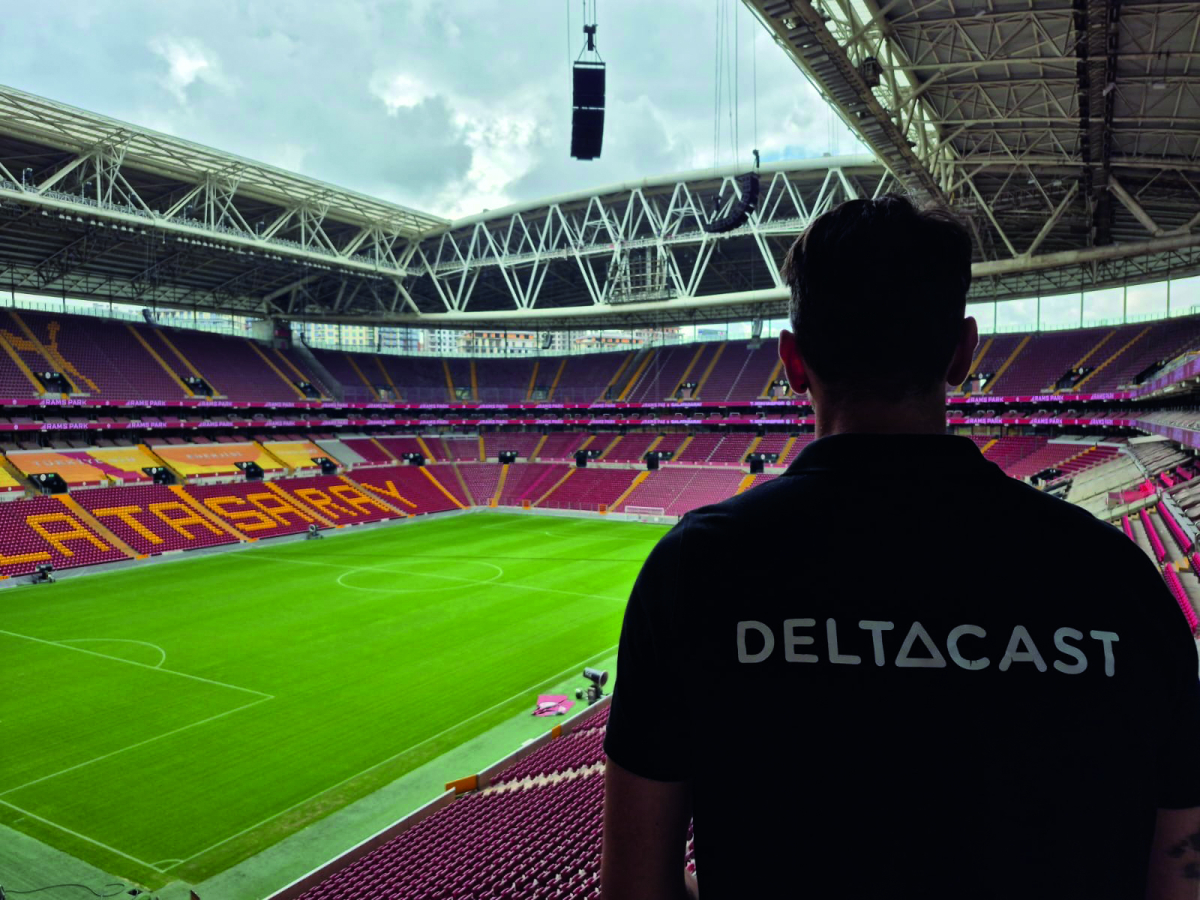
The sport-focused branch of the Liège-based DELTATEC group, DELTACAST is involved in the World Cup in two distinct ways. In Belgium, RTBF, the francophone public broadcaster, uses the DELTA-highlight software for its studio commentary. On the other side of the globe, the Argentinian TORNEOS, one of the region’s biggest production companies, makes use of the full DELTACAST suite: live augmented reality and statistics inserts. In Mexico, the Akron stadium, which will host four World Cup games, uses DELTACAST software to manage the content on all its LED screens. According to Lionel Dutilleux, Marketing Manager: “Quality is non-negotiable, especially when we provide our software and train our technicians on-site. Everything has to work correctly and effectively.” From live augmented reality to content and LED screen management, DELTACAST’s solutions are also frequently used by major concerts.
SCHRÉDER lighting that makes everything possible
The quality of a 4K slow-mo replay also hinges on how the pitch is lit. That’s where Schréder comes in. Established in 1907 in Liège, the company is not directly equipping the stadiums of this World Cup. What it has managed, however, is a methodical recovery. After a period of recentring, the Schréder sports department was rebuilt, and a new lighting platform was developed and then submitted to the FIFA Quality Programme for Floodlights. This is not an easy process: the company, its factories and suppliers were audited; laboratory testing was carried out to ensure technical validation; and on-site measurements and tests were conducted at the Cape Town DHL Stadium. Then, a seat on the FIFA technical committee for lighting. “We ticked all the boxes and have been awarded the FIFA QUALITY PRO label for our BRITELINE and OMNIBLAST solutions,” Schréder Sports Segment Manager Cédric Collard — who had been in charge of the application for 18 months — proudly told us. “This seat means Schréder is involved in the discussions that are shaping the global standards for sports lighting. We are a bit like the 12th man.” Schréder is already setting its sights on upcoming international events such as the 2030 World Cup in Spain/Portugal/Morocco and the 2034 World Cup in Saudi Arabia, a country in a permanent state of construction, erecting stadiums and airports, as well as a market the company already knows well. “Our priority is to light up every kind of sport. Seeing where we’re headed is a great motivator!
DREAMWALL behind the scenes at the stadium
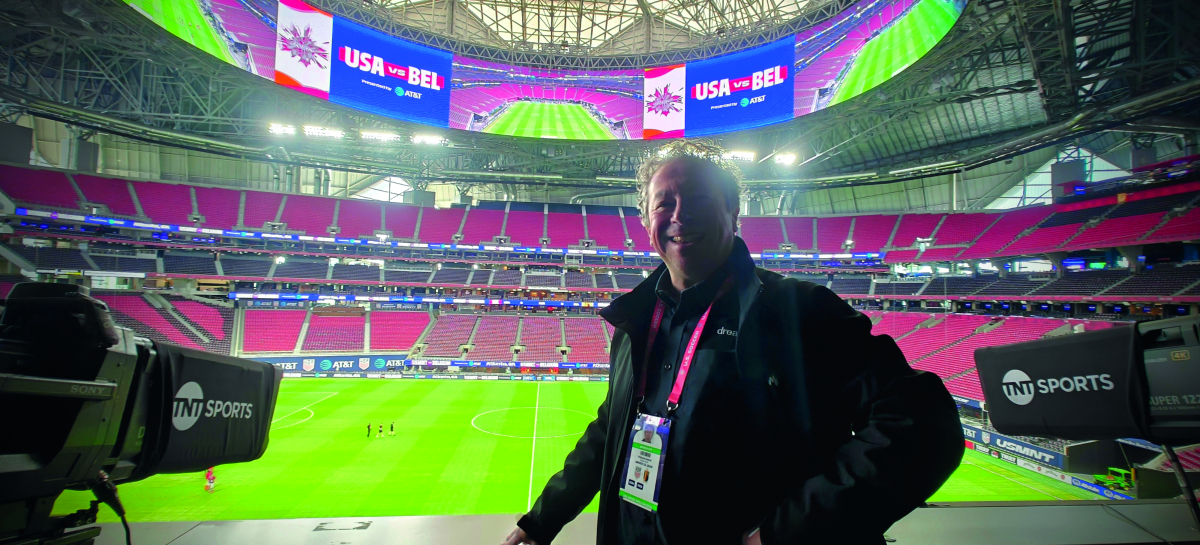
Created in Charleroi in 2007 from the marriage of RTBF and publisher Dupuis, Dreamwall is an animation and creative production studio. Twenty years later, the company is now deploying its virtual technology for replacing advertising boards at the Mercedes-Benz Stadium in Atlanta (a topof-the-line stadium with a 360° screen), which will host a semi-final for the 2026 World Cup. By overlaying, camera by camera, graphic elements on the broadcast in real time, this technology enables TV viewers to see regional advertisements rather than the ones seen by the fans in the stadium. “It was not straightforward,” admits CEO Thibault Baras, “we struggled to avoid covering up the players and the ball. But we have recently made a breakthrough!” By partnering with an Australian company, they can use its AI to recognise and differentiate between these elements in real time. “Our experience is paying off! We would not be succeeding in what we’re doing now without our previous innovations.” Dreamwall is the creator of Keywall, a subsidiary specialising in virtual green-screen studios, which, among other things, projected augmented reality in the Chamber of Deputies during the French presidential elections and worked with French TV Channel TF1 during the 2018 World Cup. The test in Atlanta sparked business discussions with the stadium regarding a rollout for the American soccer league. “We have always been bold, thanks to our in-depth technological knowledge and expertise.”
COMITTY large-scale cashless technology
Comitty Founder Thomas Farrauto did not watch the World Cup from his sofa — he studied it. Born in Mettet and an alumnus of University College HENALLUX, he has participated in Wallonia Export & Investment Agency missions to Saudi Arabia to see how major stadiums are handling cashless payment systems — or rather, what they are not doing yet. Comitty combines ticketing, bars, supplier orders, and merchandising into a single interface. It has already outfitted the Easi Arena, stadium of the RAAL La Louvière club, and provides the BarTrack module which monitors the volume of draft beer dispensed in real time, already in use by NFL stadiums. “We started with a student fair, and today we equip major stadiums. You have to aim high.” And Comitty certainly is: it is in discussions with Atlanta and has set its sights on Pairi Daiza, the Spa-Francorchamps Grand Prix and the 2030 World Cup.
WAB Magazine
Linked articles
Related articles
KIKK Festival 2026: 10 Walloon companies from the CCI sector expand their international network
Enjoy a cosy autumn with the brand-new WAB magazine
Casa Vallonia: Italy discovers Walloon green technologies