Faced with major global challenges ranging from climate change and nutritional issues to energy procurement and rival competition, companies in the Walloon food industry have stepped up by innovating, reducing their environmental impact, and bolstering their international presence. Some notable examples include COSUCRA, Mellow, Nutradia and the packaging plant at Chaudfontaine.
All these companies are supported and encouraged by the Fédération de l’industrie alimentaire (Food Industry Federation, or Fevia) and the Wagralim Agri-Food Cluster. According to Anne Reul, General Director of Fevia Wallonia, “the sector’s robustness will depend on our collective capacity to invest in innovation and in more sustainable practices, while maintaining our hallmark quality.” Emmanuel Vanzeveren, General Director of Wagralim, highlights new dynamics: “We must reinvent agronomy and processing, as well as adopt different production methods, increasingly boosted by science, technology and cooperation, while cultivating a sustainable, grounded and respectful vision.” This ecosystem is bringing together several players to create a fertile ground for initiatives to develop rapidly, and for local and regional innovations to expand internationally.
Rethinking production methods: sustainability as the driving force of industry
Walloon compagnies are showing that sustainability has become a major industrial driver, as evidenced by the sites at Chaudfontaine and Mellow.
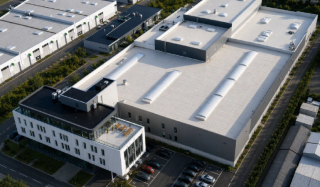
Chaudfontaine-based Coca-Cola Europacific Partners have transformed a century-old site into a role model of environmental transition. Boasting an investment of over €100 million, the site is carbon-neutral certified and was labelled as a Factory of the Future in 2025. “Our water undergoes a 60-year journey before arriving here, and it is our responsibility to protect this resource,” states Arnaud Wislez, Senior Quality, Environment, Safety & Health Manager. Every feature of the site was integrated with the intention of reducing the carbon footprint and improving efficiency. This includes a water turbine, the natural heat emitted by the mineral water spring harnessed for heating the building, river Vesdre used for cooling, and securing the local inhabitants’ fuel tanks to protect the aquifer. The site has become a benchmark for other companies.
Mellow, a premium dessert specialist that was formed from a merger between Dessert Factory and Verbau, has taken a similar approach. Their aim is to make corporate governance and corporate social responsibility a key performance driver. In 2024, the company created the role of Director of Corporate Social Responsibility, to which David Heredia was appointed. He says: “Companies have a pivotal role to play in making the world a better place. It is important to create a virtuous circle.” For their 2025-2030 roadmap, Mellow aims to expand their concrete actions, focusing on carbon footprint, an energy audit, sustainable purchasing and certified cocoa. “We must empower our teams to take responsibility, allow everyone to find their place and be heard, and provide tools to create collective intelligence through participatory governance, coaching, and continuous training.”
Rethinking innovation: generation of opportunities through science
Through their innovations, Nutradia and Cosucra demonstrate how to boost the market and stand out thanks to high added value.
Based in Andenne, Nutradia is a major producer of popped chips, which are airbaked chips that do not require frying. Having doubled their capacity in 2023, the company now has a presence on four continents. “Our innovation comes as much from the laboratory as from our customers. We are experiencing a constant demand for more practical, more protein-rich and healthier recipes. Naturally, we must always stay one step ahead,” explains Jérôme van Kempen, Head of Sales. Nutradia’s high-protein, gluten-free and fibre-enriched products showcase how the company combines scientific expertise with a meticulous understanding of global expectations. “Expectations are high, and high demand is opening up new opportunities.”
COSUCRA, meanwhile, is pursuing a different route. They focus on natural, “plant-based” ingredients used in plant nutrition, hybrid approaches combining animal and plant ingredients, and targeted nutrition. The PISANE™ pea protein and FIBRULINE® chicory root fibre have turned the company into a worldwide supplier. “Our aim is to offer clean label solutions and to assist manufacturers in restructuring by limiting additives and sugars,” says Eric Bosly, CEO. This aim is further solidified through the V-Corp certification and investments made to increase production capacity, as well as in R&D. Global demand for plant-based protein further strengthens its strategic role: producing in Wallonia to promote global food transition.
In the pursuit of international growth
Walloon companies understand one thing very well: expanding internationally translates into consolidating their model, propagating their innovations, and amplifying their impact. So much so that exports make up nearly half of the turnover in the Walloon food industry.
For COSUCRA, the takeaway is clear: “Our sales in Belgium amount to just 7%. In order to be sustainable, you need to scale up to the European level at least,” says Éric Bosly. The company promotes tailor-made products and adapts its recipes to local food cultures, such as textures for American markets, aromatic profiles for Asia, and specific applications for the Middle East.
For Nutradia, innovation is the key to global growth. “Exporting successfully requires innovation, quality and good-tasting products: only if these three elements come together do the doors open”, says Jérôme van Kempen. The perceived quality of the “Made in Belgium” brand and Wallonia’s logistically strategic central location further strengthen this dynamic.
Mellow exports 95% of its production to 41 markets. “The more we sell, the further we can afford to go in our commitments,” says David Heredia. “Sustainability is becoming an expectation among our international customers.”
Finally, Chaudfontaine is also going global, but in a different way: through the sharing of knowledge. The site, which distributes 150 million litres of products every year within a 250 km radius, plays a key role. “We test, we prove, then we share our methods with the group’s other sites across the world,” says Arnaud Wislez.
A walloon model taking shape while inspiring others
The Walloon food sector is developing rapidly, and it is all down to one quintessential element: cooperation. For instance, Fevia Wallonia and Wagralim are joining forces to support other companies in the sector in their efforts towards innovation, sustainability and international expansion. “Our companies’ capacities for resilience, adaptability and pragmatism enable them to grow rapidly,” says Anne Reul. Emmanuel Va nzeveren adds, “group projects, technological platforms and inter-company exchanges are generating a much-needed momentum for the future.”
Through these efforts, the Walloon ecosystem has become a catalyst for staying ahead of the curve. Full steam ahead!
WAB Magazine